New Rural Recycling Scheme to Replace Voluntary Farm Plastics Programmes by 2027
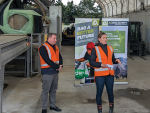
Environment Minister Nicola Grigg has announced details of a new rural plastics recycling scheme.
 increase font size
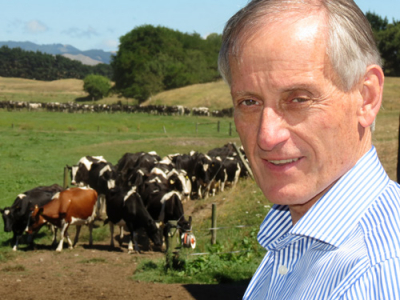 Ministry for Primary Industries Director General, Martyn Dunne.
Thirteen research projects have received funding approvals totalling $3.1 million through MPI’s Sustainable Land Management and Climate Change (SLMACC) research programme.
SLMACC supports new climate change knowledge generation in the agriculture and forestry sectors for adaption, mitigation, and cross-cutting issues.
Ministry for Primary Industries Director General, Martyn Dunne says it's essential to invest in research to better understand our future operating environment and how we need to adapt.
“We set research priority topics each funding round based on themes areas we want to investigate further for the benefit of primary industries. We consult internal and external experts to determine those topics.”
This year there were 12 priority topic areas under the three themes:
impacts of climate change and adaptionmitigation of agricultural and forestry greenhouse gas (GHG) emissionscross-cutting issues, including economic analysis, life-cycle analysis, farm catchment systems analysis, and social impact.
“We received an extremely high calibre of applicants and were very impressed with the proposed research topics,” says Dunne.
“Each project will take up to three years to complete, and the findings will help researchers, government, and farmers better understand, adapt to and mitigate climate change effects in New Zealand's primary sectors.
“At each project's end, the full report will be made available on this website and the Climate Cloud website, and user friendly summaries will be made more widely available.”
Environment Minister Nicola Grigg has announced details of a new rural plastics recycling scheme.

For the first time in a quarter of a century, Federated Farmers has something positive to say about the Labour Party’s climate change policy leading into a general election.
The Ballance Farm Environment Awards are coming to the West Coast of the South Island.
Climate, nature and animal wellbeing make up Fonterra's refreshed sustainability roadmap released last week.
There's been widespread support from the primary sector for the Government's announcement on changes to freshwater farm plans that come under the Natural Environment Bill, which is now set to replace the existing RMA.


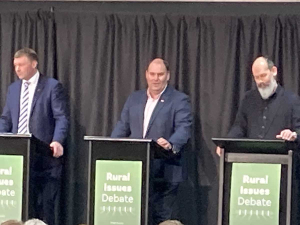
National’s much-touted free trade deal with India featured in the Rural Issues Debate at Mystery Creek, Hamilton on Wednesday night.

New Zealand's 2026-27 freshwater fishing season has opened, with anglers encouraged to head to rivers and lakes over the coming days as conditions look favourable across much of the country.
Central Otago District Council (CODC) has voted against a plan to spread treated sewage sludge from Cromwell and Alexandra on farmland near Lauder, a decision Federated Farmers says reflects strong opposition from rural residents.
Pāmu has released its FY26 Integrated Annual Report, reporting a Net Operating Profit of $113 million, more than double the $49 million recorded in FY25.
Meat Industry Association data, released alongside the Red Meat Sector conference in Wellington, shows export value climbing across the US, China, UK and Canada.
Applications are set to open for the 2027 Zanda McDonald Award, a trans-Tasman award recognised for identifying and fast-tracking talented young leaders in agriculture and agribusiness.