Ballance Farm Environment Awards Launch on West Coast
The Ballance Farm Environment Awards are coming to the West Coast of the South Island.
 increase font size

A total of $8.8 million has been awarded to 42 projects around the country after the latest round of the Sustainable Farming Fund, Minister for Primary Industries Nathan Guy says.
"These projects are driven from the grassroots and will help to improve economic and environmental performance. This co-funding will make a real difference to rural communities.
"Some of these projects include improving nutrient management, promoting pasture persistence, biological controls for pests, developing aquaculture, improving deer farm environmental management, and planning for collaborative water management.
"This includes 14 projects that have received funding from a special round that was run for Maori agribusiness late last year. Maori freehold land has enormous potential and some of these projects will help to realise the $8 billion in potential gains, as highlighted in a recent report by KPMG.
"Each project involves local groups and businesses who co-fund the work as well as running the project and bringing in the required expertise. Experience has shown this approach works and provides good value," he says.
The projects approved in the main funding round will commence July 1,2013 and run for one to three years. Most of the Maori agribusiness projects have already started, with the remaining three to commence on July 1, 2013.
The Ballance Farm Environment Awards are coming to the West Coast of the South Island.

As expected, the US has launched a safeguard investigation into lamb imports, a move that could impact New Zealand sheepmeat returns.
New Zealand's red meat sector says it welcomes the Government's focus on trade ahead of the general election in November.
New Zealand red meat exports are booming but a pending decision in the White House, Washington D.C., could dent sheepmeat earnings.
Politicians calling for New Zealand to withdraw from the Paris Agreement on climate risk damaging two of our gold-plated free trade deals.


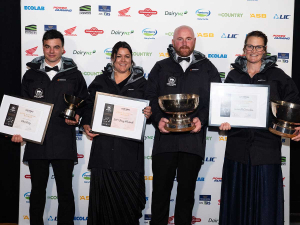
Entries opened on Monday, 5 October 2026 for the 2027 New Zealand Dairy Industry Awards (NZDIA), which organisers describe as the nation's biggest celebration of excellence in the dairy sector.
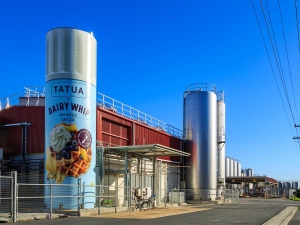
Waikato milk processor Tatua has again declared a record milk payout to farmer shareholders, leaving other processors in the dust.
A Labour-led Government won’t be bringing back the controversial freshwater rules of 2020.
National’s much-touted free trade deal with India featured in the Rural Issues Debate at Mystery Creek, Hamilton on Wednesday night.
New Zealand's 2026-27 freshwater fishing season has opened, with anglers encouraged to head to rivers and lakes over the coming days as conditions look favourable across much of the country.
Central Otago District Council (CODC) has voted against a plan to spread treated sewage sludge from Cromwell and Alexandra on farmland near Lauder, a decision Federated Farmers says reflects strong opposition from rural residents.