Hungry Kiwis pig out on free NZ pork during lockdown
NZ Pork is hailing the success of a scheme where the Government bought surplus pork and had it delivered to food banks to counter the disruptions of the Covid-19 pandemic.
 increase font size
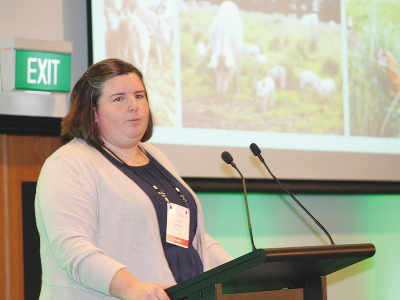 Freedom farms generalmanager Hilary Pearson.
If African swine fever (ASF) hits New Zealand it will “absolutely and totally” obliterate our pork industry, says Freedom Farms general manager Hilary Pearson.
If the disease reaches our shores “we will overnight lose every single pig in NZ,” she told the recent ProteinTech19 conference in Auckland.
Pearson says she hears this from “all the vets and all the people we speak to”.
“With consumers, the penny hasn’t dropped yet about buying imported product. Every single person who does that puts our industry at risk.
“That will have massive blow-out effects for all sorts of agriculture businesses, especially around South Canterbury where there are a lot of pig farms. I don’t think we have got our heads around that yet.”
Pearson says she is “absolutely not satisfied” that MPI has a handle on it as much as they say they have.
“I wait, hope and pray we will not have to grapple with it here.”
Pearson says she has seen information that pork is still imported into NZ from China, Poland and other countries that have confirmed ASF. She says MPI claims it is satisfied that the vet check that comes with this imported pork means it is not carrying the disease.
But she says there is “absolutely” a threat from processed products as well as raw pork.
Pearson says investigations into an outbreak last year in Belgium, which has strict biosecurity controls, have shown the disease likely came from a truck driver who threw a ham sandwich out of his window.
“It got into the wild pig population.
“There is also the idea that the wild pig population and the domestic pig population are somehow separate.”
She says every farmer Freedom Farms talks to tells them a wild pig occasionally gets onto their farm.
Pearson also pointed out that the last foot and mouth outbreak in Britain — about 15 years ago – came from imported, processed food waste.
Only about 40% of the pork consumed in NZ is grown here, she says. So 60% is imported and in the bacon category that is closer to 85%.
Pearson is welcoming the country of origin labelling coming into effect this month.
“That has been a very big struggle to get that across the line. I find phenomenal the level of resistance there has been to writing on packs of meat where that meat came from.”
Freedom’s animal welfare independently audited
Freedom Farm is equated with animal welfare and independent audits are done by AsureQuality to agreed standards.
The audits are based on the five underlying freedom principles: freedom from hunger and thirst, discomfort, pain, injury and disease; freedom to express normal behaviour; and freedom from fear and distress.
“The conversation most started by consumers is on the freedom to express normal behaviour,” says Pearson.
When Freedom Farms started in 2006, some pork farmers were doing “cool stuff” but were not being financially rewarded.
Freedom Farms is a team of four who do not own farms. They source pork from eight pig farms between Christchurch and Timaru.
Its first offering was bacon, which is still central. But over the last 13 years it has added different categories.
Its products are in 87% of NZ supermarkets and it works hard at answering consumers’ questions.
NZ Pork is hailing the success of a scheme where the Government bought surplus pork and had it delivered to food banks to counter the disruptions of the Covid-19 pandemic.
Pig farmers have joined a growing chorus in the primary sector calling on the Government to urgently review its migrant worker policies in the wake of Covid-19.
Scientists are calling for urgent action following the discovery of a new strain of swine flu.
US pig farmers could soon be culling on-site due to a COVID-19 induced backup at meatpacking plants.
Award-winning pig farmer Patoa Farms likely have the only Valtra S394 tractor in New Zealand — but that may soon change given its many benefits.

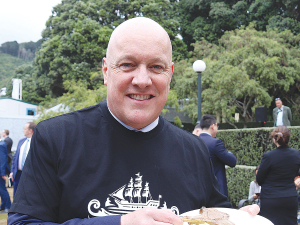
OPINION: In politics, credibility is and should be big. It must surely rank higher than charisma, which is quite trite and superficial. Yet, voters nowadays are often wooed and influenced by how someone looks or talks at a superficial level. TV plays a huge role in this.
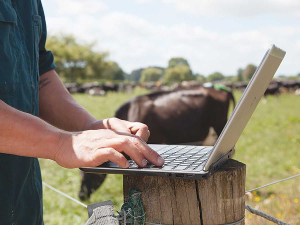
Farmers can spend less time on paperwork, thanks to a new data sharing agreement between DairyNZ’s DairyBase and LIC’s MINDA software.
Kaikōura families affected by July's severe storm have found a practical solution to a problem that's kept some children away from regular schooling for weeks: a washed-out section of Inland Kaikōura Road, which has stopped the local school bus from running its usual route.
Rural New Zealand is welcoming the Government’s recent package of rural healthcare initiatives.
Interest in agritech and production animal systems has prompted Massey University's School of Agriculture and the Environment to new majors to its popular animal science degree.
Ballance Agrinutrients chief executive Kelvin Wickham says despite a tough year, he is pleased the business has returned to profit.