BVD Control Begins Long Before You See A Problem
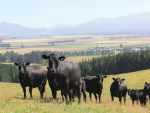
Bovine Viral Diarrhoea (BVD) is sometimes viewed as a dairy industry issue, but the reality is that the disease can have serious consequences for beef breeding herds as well.
 increase font size
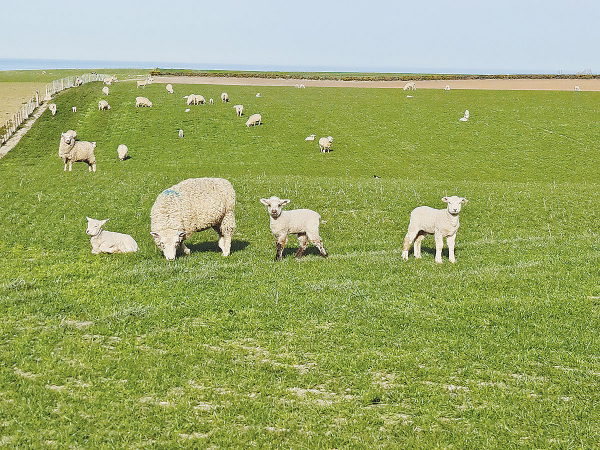 The main sheep health problems that cause loss of weight and death are facial eczema (FE), worms and pneumonia.
The main sheep health problems that cause loss of weight and death are facial eczema (FE), worms and pneumonia.
These challenges can be greatly reduced by appropriate management. In this piece we will deal with facial eczema (FE) and with pneumonia and worms at a later stage as they are more complex.
Facial eczema or FE is the result of grazing animals ingesting grass where toxic spores are present. These spores carry the toxin Sporidesmin, which is produced by the fungi Pithomyces chartaram.
Like other fungi, mushrooms for example, these are always present and only develop when environmental conditions are favourable. These conditions are when night-time temperatures exceed 12 degrees for several nights, associated with high humidity and moisture. Drizzly rain from the north is an ideal precursor to humidity.
It is believed that when night-time temperatures are above 16 degrees, spore numbers will increase greatly. Traditional ryegrass-dominant pastures have proved to be very toxic, while crops, paspalum, straight clover, chicory and plantain are a much safer option. Kikuyu is considered safe, although the debris below grazing level can be toxic.
During January the fungi will be present, but spore numbers are not normally at dangerous levels. Generally, I have found that when spore numbers are increasing rapidly by the end of January, we may have a serious challenge in the next two to four months.
Low spore numbers in early February generally indicate a season of low challenge. Incidentally, in my area, we have not had a serious challenge for more than a decade. Gribbles Veterinary monitors levels of spores each week in FE-prone areas which can be found on their website. This information I have found extremely helpful.
The first clinical signs of FE are animals seeking shade and shaking their heads. Ears will feel warmer and will soon become swollen, as will other parts of the head. This indicates liver damage. These clinical signs are the result of ingesting spores three weeks earlier.
These clinical signs are only the tip of the iceberg as many animals show no signs but will have severe liver damage. When you see the first signs, it is too late to take action – the damage is irreversible.
However, scientists have found that FE does not kill animals. They die because the disease inhibits the animal’s mechanisms to block the ultraviolet radiation from the sun, hence why animals seek shade for pain relief.
In my district, John Lane was a top sheep farmer who had a lovely property on the shores of the Kaipara Harbour, which was a hot spot for FE. Each week from 1 January he would drench all of his sheep with zinc oxide mixed with water. Inevitably he would have some sheep that were severely affected. In his woolshed he has a very dark area that had access to grass. These sheep hide themselves in almost total darkness then emerge to graze all night. After three to four weeks they would semi recover to a point where they could be sent to the works.
Wool will protect the body from these ultraviolet rays, so never shear before or at a time of FE challenge.
Reg Keogh, a top scientist from Grasslands, spent two summers in my region investigating the causes of pneumonia. He had also researched FE and was very knowledgeable as a result. He believed that the fungi that produced the toxic spores was more prolific in areas high in nitrogen. So, never apply nitrogen after winter.
Our replacement ewe lambs are the most valuable sheep on our farms – apart from our serviced sires. They are also more susceptible to FE because they are very selective in their grazing.
Put a mob of lambs in a lush paddock and after several days, you will see small areas – less than half a square metre – that have been grazed while surrounding pasture is ungrazed. In time, these ‘pockets’ will continue to be favoured until they reach almost ground level. I have always wondered why.
Reg explained that these small areas where urine was deposited in previous grazing. Urine, he explained, was rich in nitrogen and the grass was sweeter in these pockets and, as outlined earlier, is favourable for spore development. Grazing the same paddock with ewes, they would graze the whole paddock.
The FE fungi, like most fungi, are at high levels in low lying sheltered areas where heavy dews keep the pasture and the underlying debris moist late into the morning. This is a major disadvantage of planting shelter belts and hedgerows – especially in low lying areas. Conversely, the safest areas are those exposed to high winds – especially if they are facing south. Higher altitude areas are also less favourable for fungi development.
Of course, if you have used rams with a high degree of tolerance to FE over several generations, you can be more relaxed as your flock will cope with normal challenges. However, some FE counts have reached 3 million – at this level it would be a severe test even for the most tolerant flocks.
Gordon Levet is a longtime Northland sheep farmer and ram breeder.
Bovine Viral Diarrhoea (BVD) is sometimes viewed as a dairy industry issue, but the reality is that the disease can have serious consequences for beef breeding herds as well.

Animal health company Bovonic is gearing up for its next stage of growth after increasing New Zealand sales of QuadSense by more than 50% in the last 12 months, including a record quarter for the business this year.
With lambing underway in many regions, Beef + Lamb New Zealand is encouraging farmers to put together a wellequipped lambing kit to help minimise lamb losses, particularly in bad weather.
Bovine Viral Diarrhoea (BVD) remains one of the most significant infectious diseases affecting New Zealand dairy herds.
Bovine Viral Diarrhoea (BVD) is sometimes viewed as a dairy industry issue, but the reality is that the disease can have serious consequences for beef breeding herds as well.


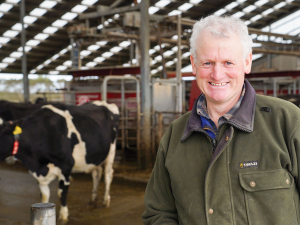
In Dacre, near Invercargill in New Zealand’s South Island, Bruce Dinnington is running a dairy operation unlike any other.

A free online platform aggregating governance vacancies across rural and regional New Zealand has been launched.
Environment Minister Nicola Grigg has announced details of a new rural plastics recycling scheme.
Agricultural drone operators say that a government decision to allow lower-risk drone work without certification won’t lower standards but drive innovation and efficiency.
OPINION: Warning bells are ringing in the arable sector.
Farmgate lamb prices are down by 8%, beef cattle by 4.5% and farm expenditure up by 4.2%.