Fonterra FY26 Results: $9.69 Milk Price, $3.4bn Profit
Fonterra has unveiled its annual results for the 2026 financial year, posting $27 billion in revenue and close to $20 billion returned to New Zealand farmer owners and unit holders.
 increase font size
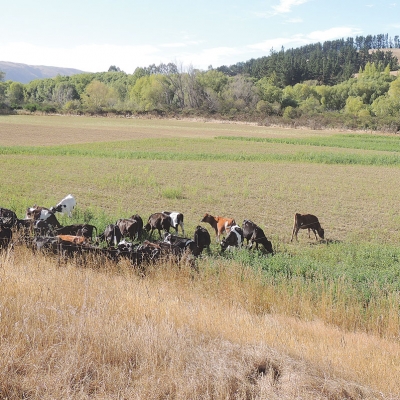 Fonterra is predicting decline in milk volume.
In the last couple of weeks we have seen a welcome recovery in the Global Dairy Trade price index, albeit on reduced volumes for this time of year.
Certainly across the Tasman, bank and other industry analysts have rushed to revise up forecasts to about $5kgMS for the current season.
Fonterra has said it now expects its milk collections for the full year 2014-15 to fall 3.3%, due to the early herd drying-off by producers hit by lack of grazing and stored feed, made worse by the prevailing low milk price. However, in its latest review the Fonterra board stayed put on its $4.70kgMS payout. So who’s right?
Firstly, it’s debatable whether the New Zealand production downturn will be too bad for the industry as a whole. A fall of that order in the full year output would mean a huge decline in milk output over the late-season months – in the order of 18% for February-May. In our latest Global Dairy Directions analysis, we are less bearish on the production decline than Fonterra for the wider New Zealand industry; we think it’s more likely that output ends 2014-15 in line with the previous year after the first half of the season saw 5.4% more milksolids collected. Even in a normal season, at least 62% of New Zealand output is collected before January, so a high proportion of this season’s production is already in the vat and sold.
Nevertheless, many analysts and commentators have credited the drought effect as the primary reason we’ve seen a lift in GDT auction prices at recent events. The deliberate reduction in product availability for the GDT auction probably has a bit to do with that trend as well. In a supply chain sector that has limited transparency in stocks either side of trading, a sentiment of ‘fear of missing out’ has been stoked by the considerable talking up of the drought effect. (Interestingly Fonterra has now added to the volumes on offer for the remaining three GDT auctions of the season.)
But let’s put the range of possible outcomes for milk availability into perspective.
When you add up the late season milk effect of the slower New Zealand output – either resulting in a flat full season outcome or even a 3% decline result across the industry for 2014-15 – the volume impact is still smaller than the estimated increased availability in milk from northern hemisphere giants EU and the US.
Milk output growth is expected to slow in the EU and US, largely thanks to lower farmgate milk prices, and will continue to do so in the first half of 2015. However, there are also weaknesses in internal demand for dairy products – for cheese in the case of EU and fluid milk in the case of US. Even small changes in consumption and production within these major dairy producing and consuming regions can release a significant amount of milk into exportable products that may in turn hit global trade. Based on our Global Dairy Directions analysis, the net effect of the interplay between production and consumption within these two dairy juggernauts is – by our reckoning – higher milk availability compared to last year. As this chart shows, the increase in milk availability from the US and EU outweighs even the more pessimistic scenario for New Zealand production loss over the first half of 2015.
So the global dairy market’s supply-side issues won’t be completely resolved by the drought conditions in New Zealand. At least, not while EU and US are heading into a seasonal production peak with domestic consumption not keeping pace with milk output. So it’s not surprising that at their review meeting last month, Fonterra’s board decided to stick with their payout forecast, despite the recent improvements in GDT index results.
Based on our analysis, a sustained recovery in international prices is still some way off, and will require either a further slowdown in northern hemisphere milk production and/or improved demand –
either from importing countries or from the US and EU.
• Joanne Bills is a director of Freshagenda, a food market analyst in Victoria.
Fonterra has unveiled its annual results for the 2026 financial year, posting $27 billion in revenue and close to $20 billion returned to New Zealand farmer owners and unit holders.
Fonterra Co-operative Group has confirmed the independently assessed candidates standing for election to its board in 2026.
Fonterra has revised its Farmgate Milk Price forecast for the 2026/27 season, lifting the midpoint and narrowing the range on the back of improving global dairy commodity prices.
Outgoing Fonterra Co-operative Council chair John Stevenson says that it has been a privilege to represent the co-op's farmer shareholders.
OPINION: It seems Canterbury processor Synlait is still in the doldrums.


Federated Farmers has called on Central Otago District Council (CODC) to drop or vote down a plan to truck sludge from Alexandra and Cromwell to farmland near Lauder, warning it would compound an "outrageous" situation created by a separate council's decision weeks earlier.
Synlait has swung to second-half profit as operations stabilise, but the dairy processor still posted a $75.4m annual loss.
LIC shareholders have elected a new North Island representative to the co-operative's Board, along with five representatives to its Shareholder Reference Group (SRG), following the company's Annual Meeting held in Invercargill.
Farmers across parts of Southland and South Otago are continuing to deal with difficult conditions after a prolonged run of wet weather, with pressure building around feed supply, stock management, pasture damage, farm infrastructure and everyday workloads.
Federated Farmers says it welcomes Labour's commitment to reviewing the Sharemilking Agreements Act, calling on other major parties to do the same.
For Canterbury dairy farmers Sian Meijer and Rick Wobben, wearable technology has become one of their most valuable on-farm tools - helping manage 1850 cows across an expansive, high-performing dairy operation while improving efficiency, mating outcomes and day-to-day decision making.