Rural retailer Farmlands says it is undergoing a transformation period.
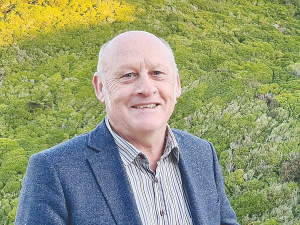
Chief operating officer Kevin Cooney, who was for a period in 2021 the co-operative’s acting chief executive (Peter Reidie left the position earlier this year, with Tanya Houghton taking up the role in September), says the transformation programme, nicknamed Braveheart, is a “big challenge” for the company.
Earlier this month, Farmlands released its annual results which saw the company make an $8.1 million profit on the back of $2.7 billion in gross turnover and $1.1 billion in revenue.
“It’s positive to have a profitable outcome, particularly when you consider that we are still transforming the business,” Cooney told Rural News.
The key aim of the transformation is to get back to having clarity in the core business and to deliver that clarity more effectively.
“It’s all about getting the right products at the right price to the right place or location for our customers,” he says. “That transformation is working, but while the foundations are in place, focus is needed.”
He adds that one of the biggest challenges for the company has been its effort to continue to be relevant in the face of big change.
“That’s about asking what role we play in that change and looking at our shareholders and asking how we support them.”
One of the biggest challenges for the company is sustainability. In 2019, Farmlands committed to integrating sustainability into its reporting and everything it does.
“At that time, we admitted that was going to be a three-to-four-year journey,” Cooney says.
He adds that Farmlands was already on that pathway and has since achieved Toitū carbonreduce certification.
“We also recognise that we have to hold ourselves to account.”
For the 2021 financial year, Cooney says, the company exceeded its goals for carbon reduction and is seeking to develop its sustainability goals further.
Farmlands chair Rob Hewett says Covid-19 has proved a disruptor for the business and will continue to be one for the foreseeable future.
“Our co-operative generally reacted well to supply chain issues caused by Covid-19 and managed stocks to ensure availability when the products were needed. We strive to continue to do this in these unprecedented times,” Hewett says.
He says the board is pleased with how the business has responded to Covid-19.
“In particular, I want to acknowledge the frontline staff that continue to go above and beyond to add value for our customers.”
“Next year, our cooperative turns sixty. It is a timely reminder that we have served, supplied and supported generations of Kiwi farmers and growers and their businesses,” Hewett adds.
“We were created to disrupt, compete and challenge. Our ambition is to continue to reinvent, to be relevant and to help our customers succeed.”