NZKGI Responds to Migrant Worker Exploitation Reports
Where any worker in the kiwifruit industry is mistreated, we expect the authorities to take action.
 increase font size
 Karen Morrish
OPINION: When we set out to document the economic impact of New Zealand's apple and pear industry, we expected to see a trickle-down effect somewhere along the way.
However, the tendrils of our industry track even further and deeper than we expected.
The New Zealand pipfruit industry generates almost $2 billion in total revenue impact for our national economy and many other industries benefit as a result.
In terms of gross domestic product (GDP), apples and pears account for 20% of the horticulture and fruit growing sector, so perhaps unsurprisingly, the biggest benefiters of industry spend were supplier of supporting agricultural goods and services.
This is a broad field and can cover everything from the apple bins that carry our delicious cargo overseas, to monitoring services, consultancy and marketing services, irrigation maintenance and testing, and much more.
These 'support services' receive 22% of the trickle-down income. In a distant second place, building cleaning and pest control sectors take another 7.3% while plastic and rubber product manufacturing sectors take home 5.4%.
Regionally, the impact of our industry is acutely felt. In Nelson Tasman the apple and pear sector is the second largest contributor to regional GDP with a $166 million GDP input. In Hawke's Bay, the industry is the third largest contributor, with a significant contribution of $424 million to the region's GDP.
In both regions, it is the support services that are the largest beneficiaries of this economic injection.
But the economic contribution of the industry doesn't finish here. Also recognised within the research project conducted by MartinJenkins was the broader contribution of the sector. This included productivity investments such as:
Each of these projects not only generated further economic benefit to local economies and boosted productivity, but they also showcase the sector's solution-focused, long-term thinking.
However, perhaps some of the most significant economic value from New Zealand's apple and pear sector is that which reaches the Pacific.
RSE workers send more than 40% of their income home to the Pacific Islands, and this income supports, on average, another nine people. It provides families and communities with a reliable and regular source of income and is used to support housing, education, living expenses, investment and business opportunities.
So, however you slice the pie (or apple), the economic impact of New Zealand's pipfruit industry does immense economic good, locally, domestically and throughout the Pacific, and we need to ensure it is able to do so for decades to come.
Karen Morrish is the chief executive of NZ Apples and Pears.
Where any worker in the kiwifruit industry is mistreated, we expect the authorities to take action.

Kiwifruit growers are watchful but remain optimistic as concerns around the potential effects of the El Niño weather pattern this season.
James Blair, an agronomist for AS Wilcox and the Pukekohe regional champion, has won the 2026 Young Grower national title.
Claimed to be the first autonomous robot for New Zealand vegetables growers, the first Kilter AX-1 unit has arrived in the country.
After delivering a strong financial year, rural trader PGG Wrightson says the coming months will depend on customer confidence and weather.


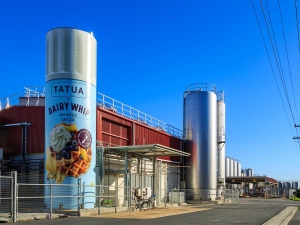
Waikato milk processor Tatua has again declared a record milk payout to farmer shareholders, leaving other processors in the dust.

A Labour-led Government won’t be bringing back the controversial freshwater rules of 2020.
National’s much-touted free trade deal with India featured in the Rural Issues Debate at Mystery Creek, Hamilton on Wednesday night.
New Zealand's 2026-27 freshwater fishing season has opened, with anglers encouraged to head to rivers and lakes over the coming days as conditions look favourable across much of the country.
Central Otago District Council (CODC) has voted against a plan to spread treated sewage sludge from Cromwell and Alexandra on farmland near Lauder, a decision Federated Farmers says reflects strong opposition from rural residents.
Pāmu has released its FY26 Integrated Annual Report, reporting a Net Operating Profit of $113 million, more than double the $49 million recorded in FY25.