NZ Milk Price Could Hit $10/kgMS as Global Supply Eases
A 'tsunami' of milk from key exporting countries is winding down and this may be good news for New Zealand dairy farmers.
 increase font size
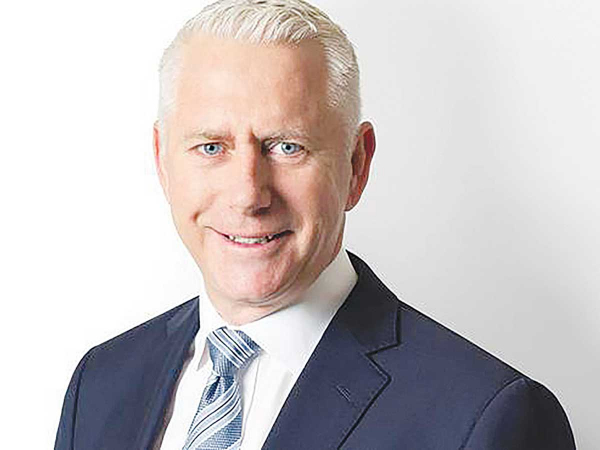 T&G Global chief executive Gareth Edgecombe.
T&G Global says it has signed the New Zealand horticulture sector’s first sustainability-linked loan, borrowing $180 million.
The three-year loan commits T&G to a science-based, greenhouse gas emissions reduction target that aligns with limiting the global average temperature increase to 1.5°C above preindustrial levels.
The loan also requires T&G to undertake a comprehensive climate risk adaptation plan to enable the company to adapt to the impacts of a changing climate and create permanent job opportunities and career pathways to help boost regional development.
T&G chief executive Gareth Edgecombe says the loan is a critical and strategic move towards long-term sustainability.
“We’re committed to making positive changes and transitioning to a healthier and more sustainable future,” says Edgecombe.
“Our Sustainability-Linked Loan and its ambitious targets demonstrates our commitment to embracing sustainable practices and meeting global consumer needs. This includes helping New Zealand transition to a low-carbon economy by decarbonising our business and adapting to a changing climate, as well as building thriving local communities.”
Edgecombe claims this loan will ensure the company keeps sustainability at the forefront of its business.
The loan follows on from T&G achieving its first climate objective of sourcing 100% of electricity from renewable sources. This was achieved by implementing energy efficiencies and switching to renewable electricity certificates to cover domestic and international electricity consumption per year.
Doug Bygrave, T&G chief financial officer, says the loan is an important milestone in the company’s 125-year history.
“T&G has a strong history of taking care of an environment we significantly rely on and looking after our people.
“We know the creation of permanent roles and the fostering of careers not only benefits individuals and families, but the benefits flow deep into local communities,” he says.
“By working with our principal banks Rabobank and BNZ as Joint Sustainability Co-ordinators, (as well as participation from HSBC and Westpac), we’ve structured a loan that sets clear and meaningful targets, which upon delivery, will deliver improved cost of capital and further embed sustainability within T&G.”
Bygrave says the loan incentivises the company to invest in climate change mitigation and adaptation activities. He adds that a key focus is the decarbonisation of its transport fleet and glasshouses, as well as electricity efficiency.
“It’s a big challenge, and our targets in the loan reflect our ambition to limit our impact and adapt.”
A 'tsunami' of milk from key exporting countries is winding down and this may be good news for New Zealand dairy farmers.

Chinese beef trade quotas and a looming suspension of Brazilian beef imports into the European Union are expected to reshape global beef trade flows over the remainder of 2026, with implications for New Zealand exporters, according to Rabobank's Q3 Global Beef Quarterly report.
New Zealand consumers are paying more for beef mince than ever before, with the average retail price now sitting above $24 per kilogram, according to Rabobank.
West Otago dairy farmer Luke Kane has been awarded the 2026 Rabobank Dr John Morris Business Development Prize.
Twenty five secondary school students from around New Zealand recently completed a three day residential programme designed to explore career opportunities across the food and fibre production supply chain.


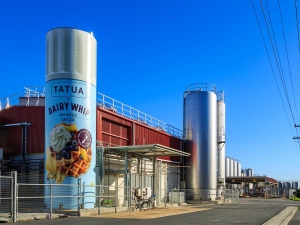
Waikato milk processor Tatua has again declared a record milk payout to farmer shareholders, leaving other processors in the dust.

A Labour-led Government won’t be bringing back the controversial freshwater rules of 2020.
National’s much-touted free trade deal with India featured in the Rural Issues Debate at Mystery Creek, Hamilton on Wednesday night.
New Zealand's 2026-27 freshwater fishing season has opened, with anglers encouraged to head to rivers and lakes over the coming days as conditions look favourable across much of the country.
Central Otago District Council (CODC) has voted against a plan to spread treated sewage sludge from Cromwell and Alexandra on farmland near Lauder, a decision Federated Farmers says reflects strong opposition from rural residents.
Pāmu has released its FY26 Integrated Annual Report, reporting a Net Operating Profit of $113 million, more than double the $49 million recorded in FY25.