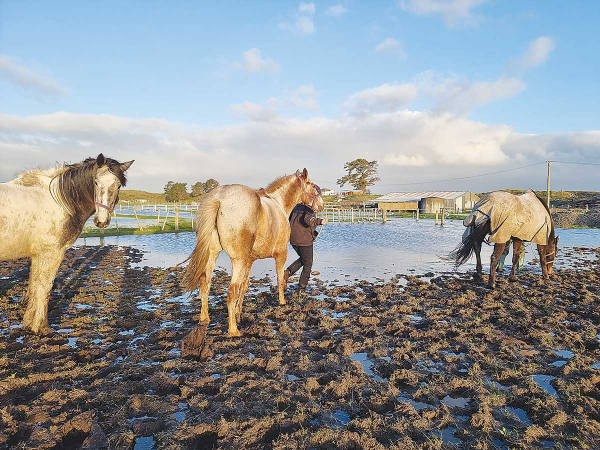
Plan for all eventualities. That’s the message from Auckland Council amid the release of a new emergency management handbook for urban dwellers moving to lifestyle blocks.
The handbook was developed by Auckland Council’s Auckland Emergency Management, Fire and Emergency New Zealand (FENZ), the Ministry for Primary Industries (MPI), and Farmers Mutual Group (FMG).
Auckland Emergency Management general manager Paul Amaral says emergencies can happen at any time.
“It is important lifestyle block owners can easily get the information they need to prepare for and make well-informed decisions to keep them, their families and their animals safe,” he says.
The Lifestyle Block Preparedness Handbook is designed to give practical advice on how to make a property more resilient to emergency events and what to do in specific emergencies.
It includes practical step-by-step advice to help owners to create a detailed emergency plan to keep themselves, their family and their animals safe.
Amaral says the handbook includes advice on emergency alerts and warnings, getting to know neighbours, power and phone outages, property access, insurance, making an emergency plan and what to do in certain emergency events.
“At the end of the handbook there is a planning template to help users develop an emergency plan which meets the needs of their unique situation.
“Experience from past emergency events has proven that lifestyle block owners tend to be less resilient than their farming neighbours,” says Amaral.
He says that while many lifestyle block owners are well intentioned, they lack the necessary information and resiliency skills.
“Many lifestyle block owners are city dwellers with little farming experience and few rural connections and networks,” Amaral told Rural News. “As their primary income normally isn’t from their property, owners rely on employment in the city to fund their lifestyle block and as such are often not on the property when disaster strikes.”
“Unlike their farming counterparts, who earn more than 51% of their income from the land and are therefore eligible for government support, lifestyle block owners are mostly not eligible.”
Amaral says this means lifestyle block owners are often disproportionately impacted during an emergency.
To get a copy of the handbook, head to: https://www.aucklandemergencymanagement.org.nz/lifestyle-block