'Clip board' council out of touch
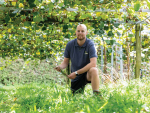
Commercial grower Bruce Rollison says he's spending a lot of time dealing with existing regulations and planning to deal with new ones that keep appearing.
 increase font size
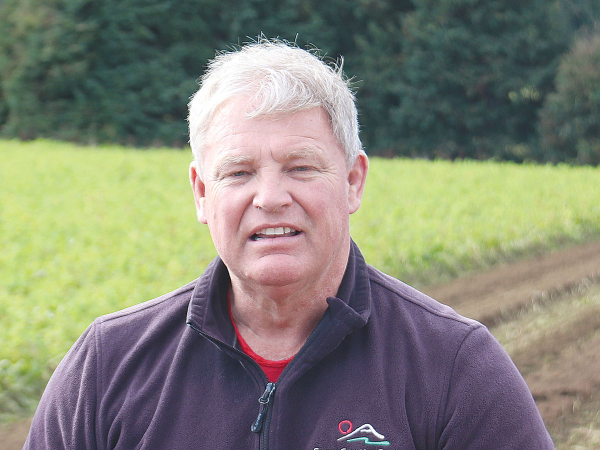 Ohakune vegetable grower Bruce Rollison says a cold growing season is affecting growth of vegetables like Brussels sprouts.
A cold growing season has thrown something of a spanner in the works for many commercial growers around Ohakune in the Central North Island.
Steph and Bruce Rollison grow parsnips and Brussels sprouts on their property just outside the township and in recent months were hit by four days of severe frosts which has had some impact on their operation.
Bruce says the Brussels sprouts haven’t sized up as much as they normally do despite the fact the crop received the same nutrient management programme they normally apply.
He says frost and the cold weather put the crops into senescence earlier. Senescence means that while the crops continue to grow, they do so more slowly than normal. This does not affect the quality of the crop, and in fact Bruce and Steph will be harvesting their parsnips up until September.
Bruce says the reason winter crops such as carrots, parsnips, potatoes and Brussels sprouts grow successfully in Ohakune is the cold climate.
He says they expect their yield to be down by at least 15% but adds that the quality of the crop is very high.
“Earlier we saw late blossoms in spring and ground temperatures were cooler, and we have had a higher-than-normal rainfall during the summer. We also haven’t had the heat units and sunshine, which are important because the greater the UV, the more vibrant the vegetables will be,” he says.
In the last few weeks there have been some warmer days and this may help the Brussels sprouts to grow better. He says, somewhat ironically, they do better in a dry year because the Brussels sprout is a big leafy green plant which needs lots of water, but in fact is great at harvesting the dews at night.
Like all growers, the Rollisons are having to deal with the changing climate and, to meet the challenges of this, are investing in new varieties of Brussels sprouts that will perform better.
Steph Rollison says the aim of planting the new varieties is not to extend the harvest season, rather it is to get plants that will perform well to the September end of harvest.
The other challenge for the couple is labour, especially younger staff. Bruce says he and Steph are both in their mid-fifties and so are most of their staff.
“We used to be able to bring in 16-year-old kids who wanted to get involved and we kept them for 10 or 12 years, when they decided wanted and to move on and take up another career,” he says.
But alas, they are not getting the young people in, so are looking at options for mechanical harvesting.
Bruce says while this is possible for harvesting parsnips, Brussels sprouts still need to be picked by hand.
“What I do now is to have a crew of two who help me with the parsnips and the rest of the staff just do the sprouts, so overall, that’s a much reduced team,” he says.
Commercial grower Bruce Rollison says he's spending a lot of time dealing with existing regulations and planning to deal with new ones that keep appearing.
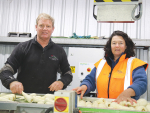
Consumers’ demands are driving the way Ohakune commercial vegetable growers Bruce and Stephanie Rollinson produce and package their Brussel sprouts and parsnips.
Sponsoring students to attend the national conference is one way Horticulture NZ has set out to engage the next generation.
Consumer preferences have moved from taste to looks. That’s the view of Ohakune commercial vegetable grower Bruce Rollison, growing Brussel sprouts and parsnips for the domestic market.


Federated Farmers has welcomed new rural policies released by ACT, saying they align closely with its own election priorities.

Rural Contractors NZ says proposed changes to land transport rules for agricultural vehicles are a welcome response by the Government to out of date regulations which have seen members hit with huge fines.
Alliance is calling for final applications for its 2027 Graduate Programme, with applications closing on Sunday 25 October.
Decades piloting planes has ensured vet and farmer David Hayes is focused on safety. So, after a serious accident while welding on farm, he is sharing his experience so others can learn from it.
Canterbury milk processor, Synlait Milk has confirmed Leon Fung as its chief executive officer.
OPINION: Making it easier to collect rainwater and use it to grow crops and livestock is a no brainer.