Trade balance with the US a saving grace
New Zealand is so far escaping the unpredictable vagaries of President Donald Trump's trade policies by the skin of its teeth.
 increase font size
 RaboResearch general manager Stefan Vogel
OPINION: The joint US-Israeli strikes on Iran, and Iran's retaliation against several countries in the region, may further tighten farm margins due to the risk of increased input costs, especially for fertilisers like urea and also for diesel.
The wider Middle East region is a key supplier of crude oil, natural gas, urea and sulphur fertilisers. Crude oil and urea prices have already risen since the attacks started, and diesel and fertiliser prices in New Zealand have also increased.
Urea price movements are linked to the risk that around 45% of the global urea supply could be disrupted via the Strait of Hormuz. The wider Middle East region accounts for a significant share of this trade. Iran has become a sizeable urea exporter in recent years, accounting for almost 10% of global urea exports. Any closure or disruption to shipping in the Strait of Hormuz - a crucial corridor for exports of crude oil, natural gas and urea - would limit shipments from Iran, Iraq, Kuwait, Bahrain, Qatar, the UAE, and to a lesser extent, Oman and Saudi Arabia.
Qatar exports about 10% of global urea via the Strait of Hormuz, and Saudi Arabia ships a large portion of its roughly 8% share of global urea exports through the same route.
Iranian retaliation against countries in the region could also affect urea supplies indirectly - for example, in Egypt, where production depends on natural gas sourced from Israel. Egypt accounts for about 8% of global urea exports.
The Middle East has also become an increasingly important market for milk powders in recent years, particularly important as Chinese demand has softened. Most imports are destined for Egypt, Saudi Arabia and the UAE. The region also imports other food and grains including around 5% of New Zealand's lamb exports and under 2% of beef. Disruptions are possible but are difficult to forecast.
The recent US tariff changes stem from a US Supreme Court ruling in early February requiring the trade tariffs introduced by the second Trump administration early last year to be removed. In response, President Trump immediately introduced a revised tariff rate of 15% under alternative tariff rules and schemes. For New Zealand products like sheepmeat and wine, US tariffs will remain unchanged, while for some of our competitors like Australia they will increase from 10% to 15%. This potentially slightly improves the competitiveness of New Zealand products in the US market relative to that of some other countries. For beef, New Zealand's major export product to the US, tariffs remain suspended, given the US had exempted beef imports from tariffs in 2025.
Stefan Vogel is general manager of RaboResearch Australia and New Zealand.
New Zealand is so far escaping the unpredictable vagaries of President Donald Trump's trade policies by the skin of its teeth.

Confusion seems to reign in the supermarkets, especially in China where consumers are faced with multiple messages about products and have little time to work out if the messages are correct.
There are some positive signs coming from China regarding dairy, according to Stefan Vogel, general manager of Rabobank Research for Australasia.
China's Covid lockdowns are impacting on New Zealand agriculture, according to Rabobank.
Covid restrictions in China are likely to slightly dampen milk powder imports into that country, according to Stefan Vogel, Rabobank research general manager for Australia and New Zealand.

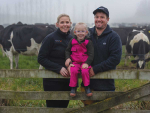
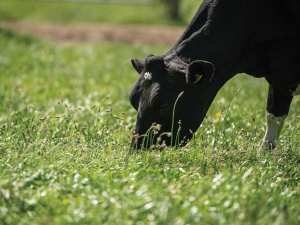
Farms across the upper North Island are trialling different pasture mixes as part of a research programme that aims to build greater resilience into farming systems.
Election years are always a concerning time for farmers, according to DairyNZ chair Tracy Brown.
The Ballance Farm Environment Awards are coming to the West Coast of the South Island.
Most dairy regions around the country have had a pretty good season so far says Tracy Brown.
Rural leader Mark Hooper has been appointed as an independent director to the NZPork board, bringing extensive farming, governance and advocacy experience to the role.