What Would Synlait Be Worth to Fonterra or a2 Milk?
Speculation of a possible joint move by Fonterra and a2 Milk to buy Synlait raises a much bigger strategic question, says agribusiness expert Dr Nic Lees.
 increase font size
 Fonterra chairman Peter McBride.
OPINION: Has Fonterra's capital structure review hit a snag?
If the volatile share price is anything to go by, then everything isn’t hunky dory within the co-operative.
When Fonterra released its proposals on May 6, chairman Peter McBride had a word of caution for farmer shareholders.
He expected moving to a farmer-only market, where only Fonterra farmers can trade shares among themselves, would impact the price at which co-op shares are traded.
He also cautioned that there may not be as much liquidity in the market.
Both the traded price of shares in Fonterra and traded price of units in the Fonterra Shareholders Fund (FSF) have collapsed since Fonterra started consulting its farmer shareholders.
Trading continues to be volatile. On May 6, Fonterra shares were trading at $4.56/share. By June 18, it had dropped to $2.80, wiping millions of dollars off farm balance sheets. Last week the price recovered a little and hovered around $3.60.
On May 6, FSF shares were trading at $4.60. Within six weeks it had shed almost a dollar.
A farmer-only market raises the question: who would be able to buy and hold shares? And what about sharemilkers and contract milkers supplying Fonterra?
Fonterra farmers also need to decide whether to keep the FSF. Again, there are mixed views among farmers.
Some farmers are questioning whether buying it back would be the best use of capital.
Removing the fund would involve an offer by Fonterra to unit holders to buy back their units at a fixed price. The approval of at least 75% of unit holders entitled to vote would be needed for the offer to be accepted. Fonterra’s consultation documents say that any fund buyback offer amount “would need to be acceptable to unit holders, fair to farmers and would need to make more sense to the co-op than the Capped Fund alternative.”
Another challenge is how to make any transition to a new capital structure as fair as possible for farmers.
With share prices nosediving, the co-op is looking at extending the timeframe in which current farmers can hold onto their shares once they retire or cease supply.
To get things moving in the right direction the chairman has been embarking on another round of farmer meetings throughout the country.
Whether he’s able to calm fears among shareholders and get them onside remains to be seen.
Speculation of a possible joint move by Fonterra and a2 Milk to buy Synlait raises a much bigger strategic question, says agribusiness expert Dr Nic Lees.

In the past, much has been made of the concept of farm to fork, but an Australian expert in food science and marketing with experience in the dairy industry, Dr Angeline Achariya, says the reverse of this slogan is critical to win modern day consumers.
A four year trial has reaffirmed that mixing plantain into dairy pastures can help reduce nitrogen losses to freshwater while maintaining milk production and profitability, say researchers.
Fonterra has opened its upgraded Chengdu Application Centre, bringing New Zealand dairy expertise closer to customers in one of China's fastest-growing regions.
Tatua chair Stephen Allen says he leaves the co-op with a deep sense of gratitude for the people who have contributed to its success.
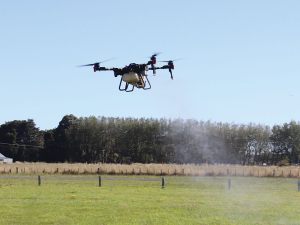
OPINION: David Seymour and James Meager's plan to make it easier for farmers and orchardists to operate drones can best be described a 'courageous' move.

New Zealand wool is reaching new heights as air filtration companies move away from synthetic products to biodegradable alternatives.
Opuha Dam's ability to protect South Canterbury communities from major flooding has taken a significant step forward, with Opuha Water Limited (OWL) successfully commissioning a new outlet valve capable of releasing record volumes of water from the dam ahead of a weather event.
There's been widespread support from the primary sector for the Government's announcement on changes to freshwater farm plans that come under the Natural Environment Bill, which is now set to replace the existing RMA.
A partnership between state-owned enterprise Pāmu (Landcorp Farming Limited) and charity Meet the Need is putting more than quality New Zealand beef into food bank parcels this year.
The Opportunity Party has faced criticism during the election campaign that its policies are too urban-focused and offer little for rural communities.