International Day of Rural Women: Two DairyNZ Farmers’ Stories
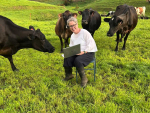
Today, 15 October, is the International Day of Rural Women, which recognises rural women’s contribution to farming, communities and the environment.
 increase font size
DairyNZ's 20th annual survey results released last week shows that dairy remains New Zealand’s economic powerhouse.
The last two dairy seasons confirm this. The 2024–25 season was a bumper year for the sector. A higher payout was the main driver, but farmers also lifted milksolids production per cow and per hectare, which supported stronger returns.
DairyNZ also points out that one significant positive trend, sometimes overlooked, was the reduction in dairy farmer debt in the 2024-25 season.
While the final numbers are still being forecast, the recently concluded 2025–26 season is shaping up to be another strong one for dairy farmers, with production reaching record levels and the milk price staying above $9/kgMS for the second season in a row.
The 2025–26 season finished on a series of records. Based on DairyNZ’s production data, national milksolids are set to reach around 2.02 billion kgMS, the first time New Zealand has passed the two-billion mark, and about 4.5% above the previous season’s 1.94 billion kgMS.
Many farms enter winter with their strongest balance sheet in recent years with strong production and a solid payout.
However, there remains concerns around rising costs.
Farmers know that this reinforces the need to continue to shift focus on-farm from maximising production to maximising profitable production.
DairyNZ is advising cautious optimism going into the new season.
The sector is in a relatively good position; however, regional feedback suggests farmers are planning for elevated costs to persist beyond this season, particularly fertiliser and fuel.
Farmers know what to do: stress-test budgets, be selective with fertiliser use, build flexibility into spring and summer feed strategies and maintain a cash buffer where possible.
Today, 15 October, is the International Day of Rural Women, which recognises rural women’s contribution to farming, communities and the environment.
The first major update to the Dairy Cattle Code of Welfare in more than a decade has been released, marking what DairyNZ describes as an important step in ensuring animal welfare standards continue to evolve alongside scientific evidence and on-farm realities.
Have a plan in place for your cows and staff.
DairyNZ deputy chair Cameron Henderson has been re-appointed unopposed for another term.
OPINION: The stats speak for themselves.



Mark Hooper has been appointed the new chair of NZPork, the industry organisation representing New Zealand pig farmers.

As the India-New Zealand free trade agreement enters into force, New Zealand’s apple industry has reaffirmed its commitment to the long-term development of India’s apple sector.
Fonterra shareholders can begin voting on Tuesday 20 October in the 2026 Board of Directors’ election, a Co-operative Council election in one Ward, and seven Annual Meeting resolutions.
National’s pledge to introduce 19 new national standards shows the party is serious about getting Wellington out of farming, Federated Farmers says.
The National Party’s policies to make it easier to grow fresh vegetables, secure reliable water and energy and simplify farm planning are practical changes that will give growers the confidence to invest, according to Horticulture New Zealand (HortNZ).
Fonterra Co-operative Group chief financial officer Andrew Murray has resigned to take up a role outside the dairy giant.