Labour Vows to Change Tact on How to Handle Freshwater Rules
A Labour-led Government won’t be bringing back the controversial freshwater rules of 2020.
 increase font size
 Agriculture Minister Damien O’Connor.
OPINION: I'm extremely proud of the ongoing high performance of our primary sector, and to be part of a Government that is backing farming for the long term.
I regularly meet with people, all over the country, to understand the challenges facing the primary sector and rural New Zealand. Through these hundreds of conversations, I have come to be very sure about a few things.
For one, rural New Zealand is thriving. We’re in the second consecutive year of substantial primary sector export growth. Export performance has risen nearly $7.5 billion in the last two years. Primary industry revenue is forecast to reach 7% growth on last year. The slowing global economy makes that all the more impressive.
I am also sure that rural New Zealand has broad based values and priorities. Farmers care about their bottom lines, of course. But they also care about the quality of what they produce, the wellbeing of their animals and land and leaving a legacy for the next generation.
Rural New Zealand is creative, innovative and forward looking. One thing you can expect in farming is that change will come and we have to adapt.
In 2015 a KPMG Agribusiness report said, “The picture confirms there is hard work to do”. Unfortunately the previous Government did very little to tackle these challenges, eg water quality, climate change and animal welfare.
This Government refuses to shy away from the fact that change is coming. We could bury our heads in the sand, but that won’t stop it and ultimately it will be farmers who are disproportionately affected by our warming climate and our increasingly extreme weather patterns.
Sitting back and doing nothing is not an option. If we respond in a smart, coordinated way, we can unlock huge opportunities.
We in the Government have the responsibility to give farmers the tools and resources to make adaptation a little bit easier.
Some would like to paint the values of farming and environmentalism as fundamentally opposed. If you scratch the veneer of that argument it is quickly revealed as nonsense.
It’s farmers who rely on the long term sustainability of our land and water. It’s a simple reality that rural people are at the forefront of the fight to protect our productive land for future generations. In my experience, the ultimate environmentalists are the ones who work intimately with our land.
It’s true that our farming sector is well ahead of the curve internationally. We always have been and that makes our exporters successful. We turn challenges into opportunities.
Our brand is built on environmental best practice and it’s what international consumers expect of us. It’s not enough to just respond to the changing preferences of the market, we need to be ahead of them, showing consumers what is possible.
Negativity and naysaying seem to be the new normal from National. By focusing on limitations instead of possibilities, and by burying their heads in the sand, our opponents are not faithfully serving the interests of farmers.
I strongly believe that value growth and sustainability are not a trade-off. In fact, increased sustainability is the only pathway to future prosperity. If we are responsive to international consumer preferences, if we collectively leverage our premium brand and if we continue to farm smarter, we will make both profitable and environmental gains.
I know that all over the country, farmers, as they learn more, are quietly getting on with the job of becoming more efficient with resources and inputs. This Government is backing them, because we know that our economy, our international reputation and the future of our food production rely on it.
Our high quality food and fibre exports are crucial to our economic wellbeing. That’s why the Government is progressing trade deals to open up the world’s largest economies to our primary exports.
Because of the generations of hard work by our farmers and growers, we have a reputation of producing some of the finest food in the world. That’s something every New Zealander should be proud of. It’s fair to say that the only constants for the primary sectors are change and challenges. Our producers should be proud of their resilience and ongoing high performance. I’m certainly very proud of them.
A Labour-led Government won’t be bringing back the controversial freshwater rules of 2020.

Federated Farmers says it welcomes Labour's commitment to reviewing the Sharemilking Agreements Act, calling on other major parties to do the same.
Red meat farmers are welcoming Labour’s plan to review the Emissions Trading Scheme and not to campaign on pricing agricultural emissions.
OPINION: It's election time.
A miserable budget that didn’t deliver much for anyone.


In farming there are external factors that can influence behaviour of a whole herd, such as a bad weather event, triggering false positive heat detections or health attentions.
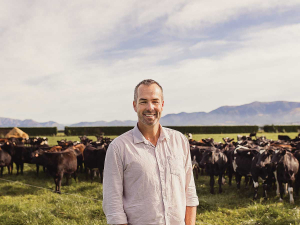
For Canterbury dairy farmer Cameron Henderson, supporting Meet the Need comes down to a simple question: how can the success of New Zealand farming benefit more than just those within the industry?
Fonterra board members are in line for a pay rise of around 3%.
Dairy processors are ready to further boost New Zealand’s export earnings but want the incoming government to match their ambition with good policy.
Massey University is best placed to solve the “problems” facing the dairy industry, says vice chancellor, Pierre Venter.
Synlait's longest serving employee – a man who joined the Canterbury-based milk processor even before it began processing milk – is now its newest executive.