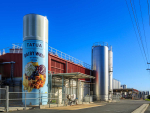
Ah Tatua, You've Done It Again!
Waikato milk processor Tatua has again declared a record milk payout to farmer shareholders, leaving other processors in the dust.
 increase font size
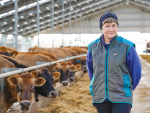
 Andrew Hoggard, Federated Farms dairy chair.
Many Fonterra shareholders were disappointed with the interim results the co-op announced last month. Many feel they are not seeing a return on their investment.
I think we might be asking the wrong question. It shouldn’t be where’s the return on our investment, but rather where do we see the value of being part of a co-op.
At the moment the milk price we are paid is based on the Global Dairy Trade result. It is averaged across the season, less manufacturing costs, to put it simplistically. All the other companies should be achieving this anyway, with their products.
We know that only a portion of what Fonterra sells goes on GDT. The rest is sold through direct links to customers. I have heard many times that a bag of milk powder sold direct to a customer usually fetches more than a similar bag sold on GDT.
Let’s say Fonterra announced the dividend had increased to 60 cents. What would have happened? We would all be in a slightly better mood probably, and the value of the shares would probably have gone up to $10 or thereabouts.
Would that have solved Fonterra’s problems or made them worse? All you Fonterra shareholders now talking about leaving Fonterra -- would you now be saying you would stay put? Why?
Surely the dynamic encouraging you to leave is even stronger now. You still receive a similar milk price, but by cashing in your shares you get a whole heap more equity you can invest elsewhere. So by performing, Fonterra could actually create more of a problem for itself.
That brings us to the crux of the matter – the milk price. Everyone will be there or thereabouts. The dividend return as a percentage will generally remain static. So a farmer with a short term issue – be it expansion, or repaying debt, or a new farm purchase – will look at the books, see all those Fonterra shares sitting there and see a solution.
How can Fonterra make that farmer look at those books and see the long benefit of being part of a co-op, for the long term benefit of our industry and farmers in having a strong, dominant co-op in the New Zealand marketplace? Because experience overseas and in New Zealand shows that the dominant co-op will always set the price, and when you lose that dominant co-op expect poor returns to follow.
• Andrew Hoggard is Federated Farmers dairy chair.
Waikato milk processor Tatua has again declared a record milk payout to farmer shareholders, leaving other processors in the dust.
Fonterra has unveiled its annual results for the 2026 financial year, posting $27 billion in revenue and close to $20 billion returned to New Zealand farmer owners and unit holders.
OPINION: Well, the silly season is upon us and all us politicians are running around shaking babies and kissing hands, or maybe the other way around.
Fonterra Co-operative Group has confirmed the independently assessed candidates standing for election to its board in 2026.
Fonterra has revised its Farmgate Milk Price forecast for the 2026/27 season, lifting the midpoint and narrowing the range on the back of improving global dairy commodity prices.


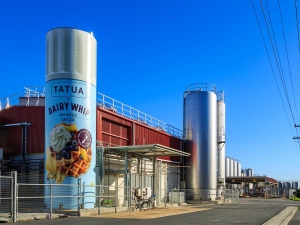
Waikato milk processor Tatua has again declared a record milk payout to farmer shareholders, leaving other processors in the dust.

A Labour-led Government won’t be bringing back the controversial freshwater rules of 2020.
National’s much-touted free trade deal with India featured in the Rural Issues Debate at Mystery Creek, Hamilton on Wednesday night.
New Zealand's 2026-27 freshwater fishing season has opened, with anglers encouraged to head to rivers and lakes over the coming days as conditions look favourable across much of the country.
Central Otago District Council (CODC) has voted against a plan to spread treated sewage sludge from Cromwell and Alexandra on farmland near Lauder, a decision Federated Farmers says reflects strong opposition from rural residents.
Pāmu has released its FY26 Integrated Annual Report, reporting a Net Operating Profit of $113 million, more than double the $49 million recorded in FY25.