Massey University Showcases Practical Solutions for Soil Health, Nutrient Retention and Kikuyu Grass Management at Fieldays
How to save soil, living with kikuyu grass and retaining nutrients on farm.
 increase font size
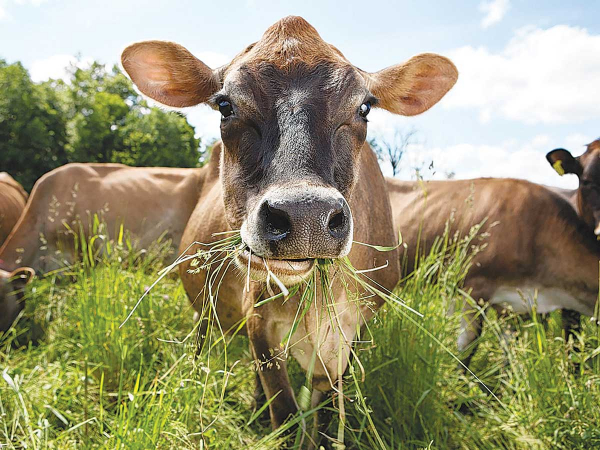 Milk fever and bloat can arise from fast-growing winter pasture.
Vet and director of Matamata Veterinary Services, Greg Jarratt on managing health issues arising from fast-growing winter pasture.
Winter pasture growth rates over the past few years have been impressive, to say the least, and a saviour to many farming operations recovering from the drought conditions of late summer.
However, while this abundant supply of free feed miraculously appearing on farm is viewed as a big plus, from an animal health perspective, it also presents some challenges.
Two of the more obvious animal health issues that arise from an abundance of fast-growing winter pasture available to cows are milk fever and bloat. Both arise from complex interactions between plant factors, animal factors and farm management factors. Of these two problems, milk fever seems by far more common, of greater economic significance and the most complex one to solve. For this reason, it is best to leave milk fever to individual farmers and their veterinarians to find solutions and focus on addressing bloat for now.
Pasture bloat is generally associated with feeding pastures with greater legume content (clovers) in conditions promoting rapid plant growth, including recent rain and fertiliser application. Plants growing under these conditions tend to have more readily soluble and digestible plant protein which is in greater concentration in the leaf of the plant. Rapid breakdown of these proteins in the rumen by microbes results in the production of stable foam trapping gas produced from the normal fermentation process.
In reducing the risk of bloat, there are several options available to herd managers.
The most practical is tweaking the feed management to ensure hungry cattle are not permitted to gorge themselves on risky pastures. This can be achieved by restricting their allowance through strip grazing and mowing leaf or providing less risky bulky feeds (hay/straw) prior to them being moved onto high risk pastures. Further strategies include drenching cows, treating water spraying pastures and painting flanks with products designed to reduce the build up of stable foam in the rumen. These products work in two general ways either by destabilising the foam (fats and surfactants – commonly known as bloat oil products) or slowing the rate of foam formation (ionophores).
Thankfully, in most cases, when using ionophores such as Rumensin ®, Bovatech ® and Rumenox ® there are additional production and animal health benefits to be gained which are sufficient to cover the cost of these treatments.
If you are encountering issues with pasture bloat, discussing various strategies involving the options above with your veterinarian is recommended.
• Greg Jarratt is a vet and director of Matamata Veterinary Services.
This article is brought to you by J. Swap Stockfoods.
How to save soil, living with kikuyu grass and retaining nutrients on farm.

A new publication has been launched that offers a comprehensive and up-to-date resource on commercially available grazing pasture species in New Zealand.
New Zealand farmers know that pastoral fortunes can shift rapidly once summer’s extreme dryness gives way to cooler, wetter autumn conditions.
Pasture renewal is the process of replacing older, less productive pastures with a completely new pasture.
To build resident populations of subterranean clover in hill country pastures, sheep farmers are encouraged to spell selected areas for four to five weeks over late spring and early summer if possible.



Now in its fourth year, the 2026 Fencing Industry Awards, formed part of the proceedings of the FCANZ Conference, held in Nelson during August.
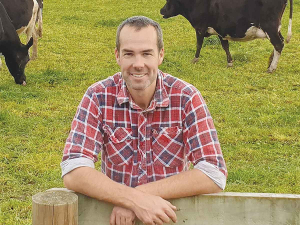
DairyNZ deputy chair Cameron Henderson has been re-appointed unopposed for another term.
OPINION: The stats speak for themselves.
Farms across the upper North Island are trialling different pasture mixes as part of a research programme that aims to build greater resilience into farming systems.
Election years are always a concerning time for farmers, according to DairyNZ chair Tracy Brown.
The Ballance Farm Environment Awards are coming to the West Coast of the South Island.