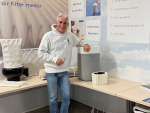
Lanaco and Blueair Launch World-First NZ Wool Air Filter
New Zealand wool is reaching new heights as air filtration companies move away from synthetic products to biodegradable alternatives.
 increase font size
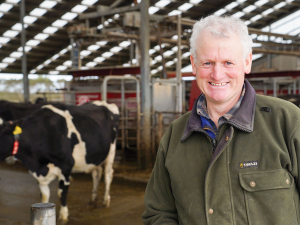
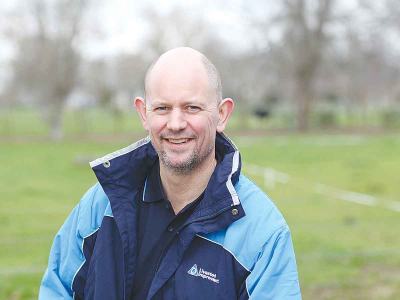 LIC chief executive Wayne McNee.
The next era of farming will start with taking full advantage of data, says LIC chief executive Wayne McNee.
Speaking at LIC’s annual general meeting in Taranaki this month, he explained how data will unlock the next wave of productivity and sustainability improvements for farmers.
“Dairy farmers are being tested as never before. They are looking for certainty and trusted partners to help them navigate the rapidly changing domestic and global industry. We want to help farmers meet those challenges head-on,” said McNee.
“Starting with the first national herd database, one of the strengths of our co-op has always been our ability to use our data to drive genetic gain, produce better milk and help farmers save time and increase their profits.
“Now, more than ever, we’re using the data our co-op collectively gathers and shares to give our farmers the ability to make faster, more informed decisions on farm. In our genomics work, big data is allowing us to supercharge the rate of genetic gain.”
McNee said LIC is moving in its digital transformation agenda, including moving one billion pieces of farm data into the cloud to open up new opportunities.
“As we move from a ‘cow-focussed’ business to a truly ‘customer-focussed’ business, we will need to [keep spending] on R&D and take advantage of emerging technologies. This work is shifting us from creating product for cows to building ecosystems for our customers to support them and their farms.”
LIC chairman Murray King, a Nelson dairy farmer, told the meeting the co-op’s “solid” financial results show it well able to keep spending on technology and data platforms to advance genetics and herd management innovations.
For the year ending May 31, 2019, LIC reported $22.2 million net profit after tax (NPAT), up 139% from $9.3m the previous year. It paid $15.6m in dividends to its 10,300 shareholders, the largest since 2013.
“The work we have completed since 2016 to shape LIC into a modern, progressive co-op have enabled this year’s solid results,” said King.
“2018-19 [saw] our new innovation-led growth strategy and a focus on the core NZ dairy industry. This year we will… take full advantage of data to benefit both LIC and our farmers. We believe these results are sustainable and we… will build on them in the coming years.”
LIC’s spending on R&D in 2018-19 was $13.6M -- 5.5% of revenue and well above the primary sector average of 1%.
The co-op got extra funding from MPI and MBIE for two key projects aimed at improving the health and wellbeing of NZ herds and more sustainable milk production.
“Our Resilient Dairy programme with DairyNZ and MPI will strengthen our existing R&D to keep our farmers and NZ leading global pastoral dairying,” said King.
This year LIC won ‘Cooperative Business of the Year’ at the Cooperative Business Awards. It was recognised for “significant and positive impact” among co-ops and for returning benefits to its 10,300 shareholders.
LIC is a finalist in the NZ Biosecurity Awards for its response to Mycoplasma bovis.
King says the co-op’s daily testing and biosecurity in the face of M. bovis are important to protect the national herd.
New Zealand wool is reaching new heights as air filtration companies move away from synthetic products to biodegradable alternatives.
Farmers can spend less time on paperwork, thanks to a new data sharing agreement between DairyNZ’s DairyBase and LIC’s MINDA software.
Generative AI in the workplace, trials in the field, and industry-relevant research took centre stage at this year’s Grape Days events in Central Otago, Hawke’s Bay and Marlborough.
An LIC bull, Tronnoco AR Sadio-ET S3F, bred by Tony and Keri O'Connor of Tronnoco Farming Co Ltd near Timaru, has won the 2026 Mahoe Trophy.
Bovine Viral Diarrhoea (BVD) is estimated to cost New Zealand's dairy and beef industries more than $150 million every year, yet many of the tools needed to control it are already well understood. After more than 25 years in veterinary practice, Andrew Weir, animal health technical specialist at LIC, has seen firsthand the impact BVD can have on herd performance. We asked him about the role of persistently infected (PI) animals and the practical steps farmers can take to reduce their risk.


In Dacre, near Invercargill in New Zealand’s South Island, Bruce Dinnington is running a dairy operation unlike any other.

A free online platform aggregating governance vacancies across rural and regional New Zealand has been launched.
Environment Minister Nicola Grigg has announced details of a new rural plastics recycling scheme.
Agricultural drone operators say that a government decision to allow lower-risk drone work without certification won’t lower standards but drive innovation and efficiency.
OPINION: Warning bells are ringing in the arable sector.
Farmgate lamb prices are down by 8%, beef cattle by 4.5% and farm expenditure up by 4.2%.