Former Beef+Lamb NZ CEO appointed head of Foundation for Arable Research
Former chief executive of Beef+Lamb New Zealand Scott Champion will head the Foundation for Arable Research (FAR) from July.
 increase font size
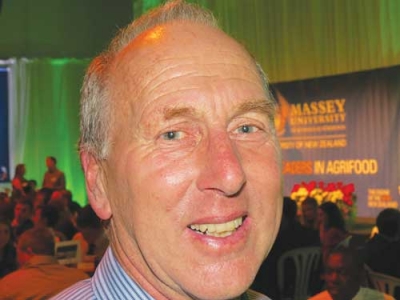 Nick Pyke.
Canterbury cropping farmers now have access to a Farm Environment Plan (FEP) template developed especially for their farm system.
The Template for Arable Enterprises has been developed by FAR and approved by Environment Canterbury as meeting all the requirements of Schedule 7 of their proposed Land and Water Regional Plan. This means cropping farmers now have access to an FEP which recognises the intricacies of their enterprise. It is hoped the template will be acceptable or easily adaptable for other regions.
The template was developed by Diana Mathers, FAR’s research manager for farm systems, who says that because most cropping farmers also graze livestock throughout the year the process wasn’t straightforward.
“There isn’t any such thing as a ‘typical’ arable farm. They may be growing any combination of cereals, herbage or vegetable seeds, or maize. They may be making hay or silage, and grazing sheep, cattle or deer – or not.
“And whatever they do grow or graze is likely to change from year to year, and even within a year, depending on markets and weather patterns. This required devising a template that would meet prescriptive regulatory requirements, but be flexible enough to accommodate the ever changing rotations of a cropping farm.
“We wanted our FEP to be as short and easy to fill in as possible, and we have finished up with an interactive template that can be downloaded and filled in on a computer or, for those who prefer it, printed off and filled in by hand.”
The template is approved by Environment Canterbury’s Farm Environment Plan assessment panel, whose chief executive, Bill Bayfield, says they are impressed by its quality and by the detailed guidance notes produced to go with it.
FAR chief executive Nick Pyke says a farm environment plan specifically designed for arable farms is important as it recognises their unique requirements.
“Arable farms are many and varied and can contain several management blocks. This template allows farmers to clearly identify any risks associated with management practices such as irrigation, nutrient and effluent use, and other potential problem areas such as silage or offal pits. We have also included a farm biosecurity section, which is not a requirement, but which many farmers may wish to consider.
“We have asked some of our growers to ‘test drive’ it, to ensure it is practical and easy to use, and their feedback has been positive. Also we plan to run workshops in the next few months to introduce growers to the template and help answer any questions on filling it out.”
The template is available on the FAR and Environment Canterbury websites.
Former chief executive of Beef+Lamb New Zealand Scott Champion will head the Foundation for Arable Research (FAR) from July.
Foundation for Arable Research (FAR) chief executive Dr Alison Stewart is stepping down in June this year after seven years in the role.
Arable growers are being invited to supply samples of their harvested crops as part of a project which uses an alternative approach to determining how well they are managing their biggest input - fertiliser.
The arable sector, which contributes $2 billion to the economy annually, has launched a new strategy.
Growers can now access information from the Foundation for Arable Research (FAR) within seconds, thanks to generative AI technology.



Ravensdown shareholders have elected Jane Montgomery and Kate Acland to the Ravensdown Board for three-year terms, following a closely contested director election.
Federated Farmers says new legislation replacing the Resource Management Act will cut red tape, unlock investment and help grow New Zealand's export-led economy, after the Planning Bill and Natural Environment Bill passed their third reading in Parliament yesterday.
Leading figures from the major political parties will be questioned on their primary sector policies at the Rural Issues Debate at Mystery Creek Events Centre, Hamilton, on 30 September.
OPINION: Have a plan in place now!
Beef + Lamb New Zealand (B+LNZ) says it welcomes the passage of the Natural Environment Bill and Planning Bill, calling the bills a positive step for sheep and beef farmers.
A spate of southerly winds bringing cold temperatures has presented challenges for Taranaki dairy farmers.