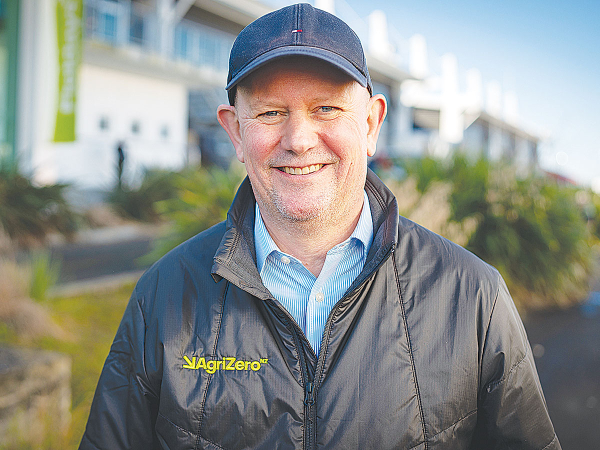
AgrizeroNZ, the public- private joint venture helping farmers reduce their emissions, has appointed Wayne McNee as its chief executive.
Major agribusiness companies ANZCO, Fonterra, Rabobank, Ravensdown, Silver Fern Farms and Synlait own 50% of AgriZeroNZ, with the other half owned by the Crown through the Ministry for Primary Industries. It was setup to deliver a step-change in investment aimed at accelerating the development and deployment of emissions reduction tools for farmers.
McNee was initially appointed the JV’s interim executive director to support its establishment after being instrumental in setting up the world-first public-private partnership, says Sir Brian Roche KNZM, AgriZeroNZ board chair.
“The board is pleased to appoint Wayne as chief executive to lead the company through its next stage of development, leveraging his deep industry knowledge and relationships across the agricultural sector and the broader market.
“The appointment will provide much needed certainty as we approach the important and challenging task of getting affordable and effective emission reductions tools into farmers’ hands,” said Roche.
McNee says he is excited to take AgriZeroNZ forward beyond its start-up phase and address the critical challenge of reducing emissions from ruminant animals in New Zealand pastoral farming.
“AgriZeroNZ is unique because of the breadth of its sector expertise and commercial focus, along with our collective ambition and advocacy to help farmers reduce their emissions while maintaining profitability.
“We have a great Board and supportive shareholders committed to this long-term partnership, and I look forward to working with them, other funders, the Government, and the companies we are investing in, to get tools into farmers’ hands and deliver on our ambition to reduce agricultural emissions by 30 per cent by 2030.”
McNee says agriculture is the backbone of the New Zealand economy, but global customers of our milk and meat products are setting ambitious greenhouse gas reduction targets which means New Zealand farmers will need to reduce emissions over time.
“AgriZeroNZ is committed to getting farmers the tools they need to meet the targets of our international customers, so they can continue to be the backbone of our economy, help New Zealand achieve its climate goals and lead the way in sustainable pasture-based farming.”
Funding to the JV from agribusiness shareholders is being matched by the Government dollar- for-dollar, to provide around $165 million for the JV’s first four years to 2026.
Since being stood up eight months ago, AgriZeroNZ has made four high-impact investments to bring emissions reduction tools to the market for New Zealand farmers worth over $12 million. Other board members are Jessie Chan, Sir Neville Jordan, Greg Murison, and Fraser Whineray.