Fencing smarts from the Emerald Isle
While a leading New Zealand brand seems to have a stranglehold on the local electric fencing market, a company from the Green Isle seems to be making significant inroads, particularly in the Northern Hemisphere.
 increase font size
 Waratah Jio MaxY post, Jio clips, Gallagher insulator.
Waratah has designed and developed fencing products for 130 years, always aiming for easier to install, simpler to maintain and better performing fencing.
The manufacturer accepts that farmers are traditional about fencing and timber will remain a popular choice of material, but believes steel fencing products have a lot to offer.
At this year's Southern Field Days at Waimumu, Waratah's galvanized Jio Star and the bigger Jio MaxY were popular and the newly released 2.7m Jio MaxY post was welcomed by industrial contractors and deer farmers, who noted that with 30+ holes along its length, there were plenty of wire attachment points for using the Jio clip for high fencing jobs.
In lots of cases a bigger strainer is needed for high fences, so Waratah also released a 3.25m Ezypipe strainer post which goes in the ground about 1.2m and works with the steel Waratah Adjusta-stay for a complete strainer assembly.
Wire tie-off is easy for professionals, but not everyone can tie a neat knot and indeed don't want to. For these individuals the Gripple T-clip is available; it brings each line wire around the strainer post, hooking the legs of the T-clip onto the line wire, pushing the wire through the one-way hole to complete the join.
The T-clip has been around for nearly eight years – a simple and effective way of preventing sore hands suffered in tying-off line wires.
Also for wire joining and tensioning, the Gripple Plus range is available in small, medium and large sizes; The Gripple tool can be used to join two wires or to tension each wire.
Tel. 0508 927 2824
While a leading New Zealand brand seems to have a stranglehold on the local electric fencing market, a company from the Green Isle seems to be making significant inroads, particularly in the Northern Hemisphere.
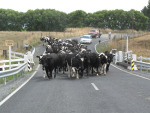
Police in the Waitematā North district are urging landowners to ensure their fences are secure after several complaints about wandering stock.
The Brandt Group of Companies has announced that they have partnered with John Deere and Waratah to make a $160,000 donation to the New Zealand Red Cross.
GreenRiggers electric fence outriggers are designed and manufactured in New Zealand.
Taragate's updated geared reel system is an even more user-friendly unit.



National’s pledge to introduce 19 new national standards shows the party is serious about getting Wellington out of farming, Federated Farmers says.

The National Party’s policies to make it easier to grow fresh vegetables, secure reliable water and energy and simplify farm planning are practical changes that will give growers the confidence to invest, according to Horticulture New Zealand (HortNZ).
Fonterra Co-operative Group chief financial officer Andrew Murray has resigned to take up a role outside the dairy giant.
A major move is about to get underway to improve the quality and viability of dairy beef and cattle in NZ.
Veterinarians say changes to the code of welfare for dairy cattle provides a positive foundation for improved cattle welfare across the country.
Today, 15 October, is the International Day of Rural Women, which recognises rural women’s contribution to farming, communities and the environment.