Top dairy CEO quits
Arguably one of the country's top dairy company's chief executives, Richard Wyeth has abruptly quit Chinese owned Westland Milk Products (WMP)
 increase font size
 Westland’s UHT destined for China.
A major Westland Milk Products strategy is to increase the amount of value added products versus commodity milk powder.
The much talked about figure was 30% percent, but the new chief executive, Toni Brendish, says the co-op still has not achieved this.
“The previous strategy was expressed as value added. As far as I am concerned, value added is not a strategy; I define value add as what you do, in other words an outcome.
“Having worked in fast moving consumer goods for nearly 30 years, I see value add as everything from your supply chain, your finance, marketing, products -- everything. Westland’s strategy needs to be fine-tuned: we want the outcome of selling more value add, and the strategy is how we achieve that.”
Brendish believes Westland’s move into Canterbury was a good strategy because it helped achieve efficiencies within the business.
WMP’s getting back on its feet will require people who can execute the new operation strategies, she says. Redundancies are inevitable, but no numbers are available yet because the review of the organisation is not finalised.
New product initiatives will kick in over the next three months, all in the higher margin category. The Westland team is focusing on efficiencies in sales and marketing and supply chain areas.
“Everyone including the shareholders is asking me for a time-line as to when things will happen. We have to get in place a number of things so that when we start the new season they have an impact. So we are talking August of this year.
“One reason for doing the review now is so that we are up and running and well prepared. A couple of other things probably won’t start to hit until the latter part of the year because they will require capital spending and various things. But we have to start seeing the benefit of the change from the start of the season.”
Being a small company enables WMP to be agile and to react quicker than larger companies -- an advantage, as is the uniqueness of the Westland story.
“I will probably tell it differently because of the person I am. There are many great stories to be told about how a cooperative works and how we are successful. People outside New Zealand love to hear how it evolved, and we want to connect the end user with the farmer; technology will make that happen. People will be able to see the farm, the cows and all aspects of the farming operation. For example, we know now that in China animal welfare is an issue for consumers.”
Brendish sees something special in the West Coast heritage. “It is almost more NZ than NZ and I think there is an opportunity to leverage off that.”
Arguably one of the country's top dairy company's chief executives, Richard Wyeth has abruptly quit Chinese owned Westland Milk Products (WMP)

OPINION: This old mutt well remembers the wailing, whining and gnashing of teeth by former West Coast MP and Labour Agriculture Minister Damian O’Connor when Chineseowned Yili took over the troubled dairy company Westland Milk a few years back.
Westland Milk has reaffirmed its commitment to pay farmer suppliers 10c above Fonterra farm gate milk price for the following two seasons.
Not all milk processors in New Zealand are struggling; just look at Westland Milk Products on the West Coast.
Dairy farmers supplying Chinese-owned Westland Milk Products in Hokitika had another reason to celebrate this holiday season.


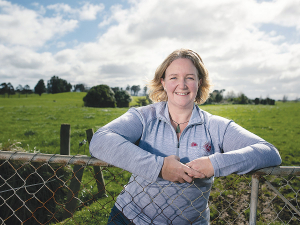
Farmers are being encouraged to rethink how they manage waste on farm with the launch of ruralwastesorted.co.nz, a new website bringing together practical tips, real farmer experiences and resources.

New Zealand Winegrowers (NZW) is celebrating the India-New Zealand Free Trade Agreement (FTA) coming into force today, bringing New Zealand wine improved access to one of the world’s fastest-growing economies.
New Zealand’s red meat sector has welcomed the India-New Zealand Free Trade Agreement taking effect, which removes India’s 33% tariff on New Zealand sheepmeat.
More than 95 per cent of New Zealand’s forestry and wood exports to India can now enter tariff free as the New Zealand-India Free Trade Agreement comes into force today.
Federated Farmers is backing Feilding High School’s call to keep Agriculture and Horticultural Science as a standalone subject in Year 11.
Food and fibre exports have returned a billion- dollar bonus to the country.