
Farmers applaud retiring commissioner
Farmers have thanked the outgoing Parliamentary Commissioner for the Environment Dr Jan Wright for her service.
 increase font size

The science on fresh water quality is confusing and complex, says Parliamentary Commissioner for the Environment Jan Wright.
Speaking to Dairy News at the launch of Water Quality in New Zealand – Understanding the Science, she said her report gives decision makers and the public a better understanding of the science, “not an analysis of water policy or water management.”
People are confused about what science is right and what is not. “I hope that people reading this report [can] interact with science experts [to] ask better questions, understand the advice and test the advice they’re given.”
Wright describes the 90-page document as a ‘guide’ to fresh water quality science, but not a complete reference work on the subject.
“Water quality science is complicated, much is unknown and often the devil is in the detail,” she says. The report has a focus of ‘cause and effect’ and explores some of the historical reasons for today’s problems. It says the major causes of pollution are pathogens, nutrients and sediments.
Wright says she tends to agree with scientist Clive Howard-Williams that sediment is the biggest problem. While the report doesn’t says so specifically, it isn’t hard to deduce that most sediment problems arose during the opening up of marginal lands in the 1960s and 1970s, subsidised by taxpayers’ money. Bush burning that exposed steep hillsides is now a major cause of erosion and sediment in rivers.
“Sheep farming gave us the erosion which gave us the phosphorous and dairy farming is now giving us the nitrogen [chiefly as] urine from stock – dairy cows… in river catchments. Sheep and beef are higher up in the catchment and when they put urine on the ground it’s drier up there so it’s probably just going to help the grass grow.”
Wright jokes that the biggest problem with cows is they urinate in one place. “If only we could teach them to move around when they urinate, it would help. I understand bulls do this, but not cows.”
But Wright is quick to say her report is not a ‘blame’ document, rather it is to help people decide about water quality. They should not use the excuse of asking for more science as a means of delaying their decision making.
“It’s important to pick out how much science we need to make the decisions we need to make. If you gather more information and it doesn’t change the decisions you’re making, then you’re going too far.”
Listening to dairy farmers about fresh water quality science must be a priority, Wright says. “You can sit in Wellington and devise solutions [but] when you go out to a farm it can be quite different; and a lot of this is farm specific,” she says.
Farmers have thanked the outgoing Parliamentary Commissioner for the Environment Dr Jan Wright for her service.

Reaction to the Parliamentary Commissioner for the Environment's report has been positive.
No one immediate solution is available to New Zealand to deal with the problem of greenhouse gas emissions caused by agriculture.
New Zealanders must work together and start tackling the complex problem of the biological greenhouse gases from agriculture, says Dr Jan Wright, Parliamentary Commissioner for the Environment.
Climate change, pests and erosion -- rather than dairy --have been singled out by the parliamentary commissioner for the environment as the big issues facing the land in NZ.



National’s pledge to introduce 19 new national standards shows the party is serious about getting Wellington out of farming, Federated Farmers says.
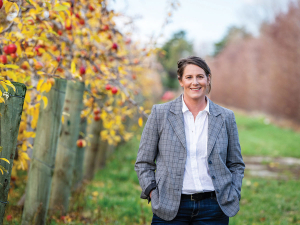
The National Party’s policies to make it easier to grow fresh vegetables, secure reliable water and energy and simplify farm planning are practical changes that will give growers the confidence to invest, according to Horticulture New Zealand (HortNZ).
Fonterra Co-operative Group chief financial officer Andrew Murray has resigned to take up a role outside the dairy giant.
A major move is about to get underway to improve the quality and viability of dairy beef and cattle in NZ.
Veterinarians say changes to the code of welfare for dairy cattle provides a positive foundation for improved cattle welfare across the country.
Today, 15 October, is the International Day of Rural Women, which recognises rural women’s contribution to farming, communities and the environment.