LIC: Faster Bull Team Change Reflects Genetic Progress
In the past, a bull could sit comfortably in a breeding team for several years with little change, but today, that’s no longer the case.
 increase font size
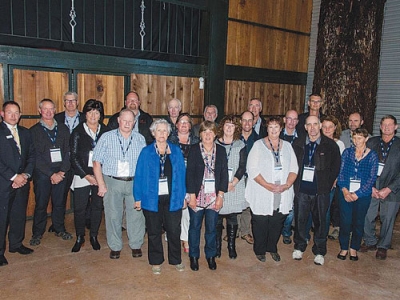 LiC Jersey team daughter proven breeders.
Top bull breeders met this month to celebrate their contribution to New Zealand’s dairy industry.
Breeders from all over the country were invited to LIC’s annual Breeders’ Day in Hamilton on April 14 after supplying a bull calf to the cooperative which went on to form part of its 2014 elite artificial breeding teams, Premier Sires.
LIC chairman and Nelson dairy farmer Murray King says the event recognises the co-op’s partnership with farmers who have bred a bull good enough to sire future generations of dairy cows.
“As a farmer, I stand in awe of what you have achieved. You are not only successful dairy farmers, but you also have the distinction of belonging to a unique group of farmers who breed bulls good enough to bear the Premier Sires title.
“LIC is immensely proud of our partnership with you, and the value it delivers – not just this year, but for years to come -- on the average Kiwi dairy farm, to the industry as a whole, and to the NZ economy. You can all take pride in knowing that your excellence in farming and animal breeding is making an enduring difference.”
The co-op’s Premier Sires bull teams are responsible for about three out of four dairy cows in NZ.
Since its Sire Proving Scheme was introduced 54 years ago, LIC has proven just over 10,000 bulls for widespread use on farms nationwide, with each year’s intake of bulls better than the year before, King said.
Prior to that, an analysis of sires in 1939 found that only 28% improved production, 33% maintained production and 39% lowered it.
“Back in the 1950s the evolving science of artificial breeding raised eyebrows, but any concern turned to delight when bull daughters started to deliver better production than their dams.
“There are many things LIC does which embody what it means to be a co-operative – to work closely with and for our farmers – and there’s no better example than sire proving and the Premier Sires team of bulls.”
In the past, a bull could sit comfortably in a breeding team for several years with little change, but today, that’s no longer the case.
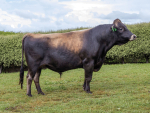
Paynes Titus Excelsior ET, an LIC bull bred by Brad Payne and Claire Brodie in the Waikato, has won the JT Thwaites Sire of the Season 2026 Award.
New season data from LIC shows a strong reproductive performance for the 2025-26 season, with a lift in key metrics compared to last season.
OPINION: Farmer confidence can feel a bit distant until a decision made at board level lands right back at the farm gate.
Visitors to the LIC stand at this year’s Fieldays can expect practical farm conversations, specialist drop-in sessions and exclusive shareholder events.
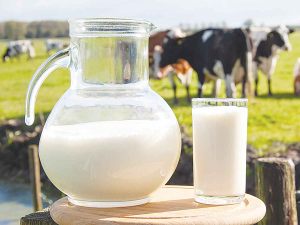
New Zealand dairy farmers are set to be the first in the world to receive access to a new digital physical milk pricing tool that enables them to fix the price for their physical milk.
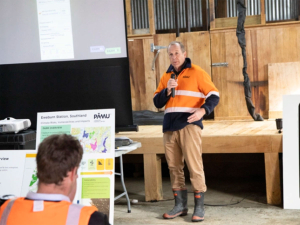
State farmer Pāmu is opening its farm gates this summer in an effort to give the rural sector the opportunity to see how large-scale, multi-system farming is delivering productivity and profitability across New Zealand.
A five-year study has found that the cost of reducing emissions without technology may be significant and unsustainable for Northland dairy farmers.
DairyNZ says Waikato farmers need certainty on Plan Change 1, but they say that certainty must be matched with practical, workable rules and a clear transition that doesn't get ahead of the new resource management system currently under review.
While the Government has moved quickly to make commercial hauliers' lot easier during the current fuel crisis, they appear to be stuck in the creep box when it comes to the agricultural industry.
Waikato farmers have been told that the Government’s new planning system legislation and the region’s Plan Change 1 (PC1) “won’t mesh together very well”.