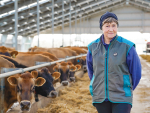
Breeding the Ultimate Robot-Ready Jersey Herd
In the beautiful, scenic expanse of Invercargill, Joanne (Jo) Crack of Southern Star Farms is redefining what it means to run a modern, self-sufficient dairy operation.
 increase font size
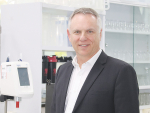
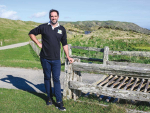
 Alexander van der Lely.
Automation company Lely says fully robotic farms are the future for the booming global dairy industry.
The company is on the brink of introducing a fully automated decision-based farm management system that will run the farm on behalf of the farmer.
Lely chief executive Alexander van der Lely gave his take on the future dairy farm at the company’s 70th year celebrations and Lely Future Farm Days in Maassluis, Netherlands this month.
Lely says he envisages fully robotic dairy farms worldwide.
“Adaption of automation is really gaining pace now; there seems no end to this trend and there’s a reason for it,” he says.
“Robotisation is for most countries the only answer to labour shortage and to succession. It’s no secret that fewer people want to work in the agricultural industry and automation offers a real solution.”
The company has launched a new, redesigned robotic milker -- the Lely Astronaut 5 -- scheduled to make its NZ debut at the National Fieldays in Hamilton in June.
Lely introduced its first Astronaut robotic milker (A1) in 1992; today 30,000 Lely robots milk cows around the world.
Alexander Lely says farmers are part of his company’s DNA and its innovations are designed to help farmers enjoy profitable and sustainable dairying.
Future farm integrated solutions from Lely will centre on the cow and automate repetitive tasks in the milking shed so that farmers can “focus on things that really matter”.
Lely says the `decision-based´ farm management system supports increased profitability, sustainability and usability for both farmer and cow.
“This software uses the many data sources available on the farm and from the ecosystem surrounding it. Instead of only presenting information, the system will propose or even make decisions with the farmer’s permission.
“The system will be self-learning and, over time, will adapt to the farmer’s preferences for running the farm.”
He urged other dairy industry stakeholders, e.g. vets, feed and insemination suppliers, to work with his company.
“We cannot do this alone,” he said.
In the beautiful, scenic expanse of Invercargill, Joanne (Jo) Crack of Southern Star Farms is redefining what it means to run a modern, self-sufficient dairy operation.
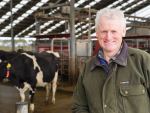
In Dacre, near Invercargill in New Zealand’s South Island, Bruce Dinnington is running a dairy operation unlike any other.
Getting calves away to a strong start means attention to detail from day one, so the Lely Calm, an automatic drinking system for calves, prepares and feeds rations at the right temperature and is designed to ensure calves receive smaller, more frequent portions throughout the day.
The first weeks of a calf's life quietly shape the future of the entire herd.
Since its decision to concentrate on milk harvesting and animal husbandry, resulting in the selling of its agricultural machinery brands and factories, Lely’s focus seems to be paying off with a growing business.

OPINION: Political parties are getting plenty of advice and recommendations from sector groups as the election approaches.
In farming there are external factors that can influence behaviour of a whole herd, such as a bad weather event, triggering false positive heat detections or health attentions.
For Canterbury dairy farmer Cameron Henderson, supporting Meet the Need comes down to a simple question: how can the success of New Zealand farming benefit more than just those within the industry?
Fonterra board members are in line for a pay rise of around 3%.
Dairy processors are ready to further boost New Zealand’s export earnings but want the incoming government to match their ambition with good policy.
Federated Farmers has welcomed new rural policies released by ACT, saying they align closely with its own election priorities.