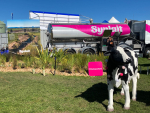
What Would Synlait Be Worth to Fonterra or a2 Milk?
Speculation of a possible joint move by Fonterra and a2 Milk to buy Synlait raises a much bigger strategic question, says agribusiness expert Dr Nic Lees.
 increase font size
 Fonterra Co-operative Council chair John Stevenson says Scope 3 emissions target is generating some apprehension among the shareholder base.
There is some unease among Fonterra's shareholder base as the co-operative sets out to tackle Scope 3 emissions generated by the business.
With Fonterra farmers already under the pump due to weather-related events, cost pressures, cash flow and labour shortages, how the Scope 3 emissions story will play out is currently unknown and causing uneasiness.
The co-operative has been meeting with farmers and will soon announce what the Scope 3 target will look like.
Scope 3 emissions include carbon emissions not produced by the company itself, but by those that it's indirectly responsible for, like farmers.
Fonterra says that 91% of its group emissions are from behind the farm gate.
Farmers are being told that the co-operative is under increasing pressure from both customers and consumers, regulators, and more and more from the financial sector, to put out a scope 3 emissions target.
Fonterra Co-operative Council chair John Stevenson told Dairy News that Scope 3 emissions “is generating some apprehension among the shareholder base”.
There is uncertainty around what steps farmers can take on farm to reduce their emissions intensity, and for some there may currently be a gap between “what farmers can deliver compared to what customers want”.
“As a council we are here to bring some balance to the conversation through representing the views of our farmers.”
Stevenson notes that the situation on farm is already challenging.
“Combine this with the pace of change required from regulators and changing customer demands, it is having an impact on how we farm.
“Regarding changing customer demands, our farmers are looking hard to Fonterra for evidence that changed practices on farm will deliver value into their pockets.”</p
Stevenson points out that Fonterra is well placed to help farmers overcome some of the sustainability challenges ahead.
“There is no doubt we will see further pressure from Government, customers and banks. The key will be to make sure Fonterra takes its farmers on the journey, provides support and does not set requirements that are too difficult to achieve.”
Fonterra farmers are telling the council that the pace of change within the last 18 months is causing pressure.
And Stevenson points out that the pressure is not just from a financial standpoint, it comes at a time when many farms have been understaffed due to workforce shortages.
“Our members are doing more on the farm and more off the farm,” he says.
Uncertainty also affects investment in the future.
Stevenson says there’s lot of technology out there to help with productivity, but farmers need certainty in the future to commit to these investments.
He says the forecast farm gate milk price is still under pressure.
“Farmers margins and balance sheets are as squeezed as they have been for a long time.
“There is uncertainty and volatility in the global market. Farmers will look to what they can control and consider their budgets carefully.”
Speculation of a possible joint move by Fonterra and a2 Milk to buy Synlait raises a much bigger strategic question, says agribusiness expert Dr Nic Lees.

In the past, much has been made of the concept of farm to fork, but an Australian expert in food science and marketing with experience in the dairy industry, Dr Angeline Achariya, says the reverse of this slogan is critical to win modern day consumers.
A four year trial has reaffirmed that mixing plantain into dairy pastures can help reduce nitrogen losses to freshwater while maintaining milk production and profitability, say researchers.
Fonterra has opened its upgraded Chengdu Application Centre, bringing New Zealand dairy expertise closer to customers in one of China's fastest-growing regions.
Tatua chair Stephen Allen says he leaves the co-op with a deep sense of gratitude for the people who have contributed to its success.

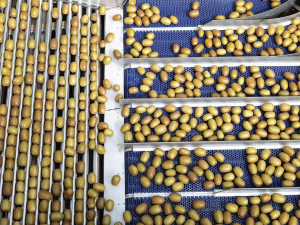
More signs of a booming kiwifruit sector.
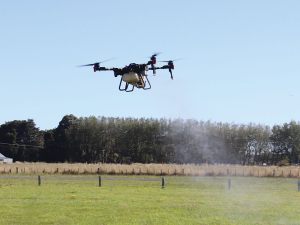
OPINION: David Seymour and James Meager's plan to make it easier for farmers and orchardists to operate drones can best be described a 'courageous' move.
New Zealand wool is reaching new heights as air filtration companies move away from synthetic products to biodegradable alternatives.
Opuha Dam's ability to protect South Canterbury communities from major flooding has taken a significant step forward, with Opuha Water Limited (OWL) successfully commissioning a new outlet valve capable of releasing record volumes of water from the dam ahead of a weather event.
There's been widespread support from the primary sector for the Government's announcement on changes to freshwater farm plans that come under the Natural Environment Bill, which is now set to replace the existing RMA.
A partnership between state-owned enterprise Pāmu (Landcorp Farming Limited) and charity Meet the Need is putting more than quality New Zealand beef into food bank parcels this year.