Climate-friendly cows closer
Dairy farmers are one step closer to breeding cow with lower methane emissions, offering an innovative way to reduce the nation's agricultural carbon footprint without compromising farm productivity.
 increase font size
ANIMAL BREEDING company CRV Ambreed says the opening of a new production and logistics centre marks the start of an exciting new era for the company.
The CRV Bellevue Production and Logistics Centre, based on the outskirts of Hamilton, is a purpose-built facility which future-proofs the company with additional capacity to meet the market's growing demand for its bovine semen products.
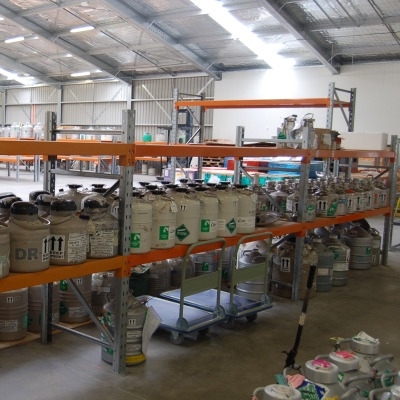
The centre houses a semen collection facility, a semen processing laboratory, storage space for export and domestic products, a warehouse with farmer AI banks, and 38ha of grazing paddocks.
CRV Ambreed managing director Angus Haslett says the facility was developed to the highest standards required to ensure the business meets its domestic and export compliance, biosecurity requirements and animal welfare standards.
"A key driver behind development of our new centre is the ability of CRV Ambreed to continue meeting increasingly stringent biosecurity requirements while also protecting the quality of CRV Ambreed products," he says.
"The move to this new facility ensures our business continues to meet the changing needs of the dairy industry, both within New Zealand and around the world. Compliance standards are continuously being scrutinised by Government authorities, and our new facility allows us to meet the highest standards and grow our export markets."
CRV Ambreed is part of the third largest artificial breeding company in the world with around 25% market share in New Zealand. It exports semen to South America, South Africa, Australia, parts of North America, the UK and Ireland.
Currently close to 1.8 million straws of semen are distributed across New Zealand and exported to overseas markets from its facilities each year.
"We had been operating out of our previous site since CRV Ambreed was first established 45 years ago. As the company grew, we evolved our infrastructure to adjust to that growth, but never had a truly purpose built facility until now," says Haslett.
Dairy farmers are one step closer to breeding cow with lower methane emissions, offering an innovative way to reduce the nation's agricultural carbon footprint without compromising farm productivity.
CRV has produced the first homozygous polled bull to make New Zealand’s prestigious Ranking of Active Sires (RAS) list, demonstrating the strides the company is making in breeding top-quality polled bulls.
As Mycoplasma bovis (M. bovis) resurfaces in Canterbury, CRV is reassuring dairy farmers it has rigorous production processes and health testing programmes in place within its supply chain.
Sharemilker Mark Shefford believes he struck a deal with himself the day cow collars were fitted to his 1,240-cow herd near Waimate, South Canterbury.
Research has found that having semen from three bulls in one straw can increase dairy farmers’ average 56-day Non-Return Rate (NRR) by 4.2%.



Now in its fourth year, the 2026 Fencing Industry Awards, formed part of the proceedings of the FCANZ Conference, held in Nelson during August.
DairyNZ deputy chair Cameron Henderson has been re-appointed unopposed for another term.
OPINION: The stats speak for themselves.
Farms across the upper North Island are trialling different pasture mixes as part of a research programme that aims to build greater resilience into farming systems.
Election years are always a concerning time for farmers, according to DairyNZ chair Tracy Brown.
The Ballance Farm Environment Awards are coming to the West Coast of the South Island.