Synlait CEO Resignation Highlights Deeper Challenges Facing Dairy Processor
A revolving door of chief executives at milk processor Synlait is a warning sign, says Lincon University senior lecturer in agribusiness Nic Lees.
 increase font size
 John Penno, Synlait.
Infant formula volumes remain the key driver of Canterbury-based Synlait Milk Ltd’s increasing profits, says managing director John Penno.
But he has highlighted geographic expansion into Auckland and Waikato, and a move into domestic retail, as drivers of future growth.
Penno was speaking as the company reported a record half-year net profit of $40.7 million for the six months ending January 31 – up from $10.6m for the same period last year.
Total net debt for the period was $49.7m, down from $147m, despite big capital spending of $34.5m, mainly on the Synlait Auckland blending and canning facility ($11.2m), a new wetmix kitchen at Synlait Dunsandel ($18.4m) and a new R&D centre in Palmerston North. Now it is planning to spend $260m more to set up a nutritional powder plant at Pokeno, Waikato, and $125m on an advanced liquid dairy packaging plant at Dunsandel.
Penno told journalists the increased profit was from increased volumes of canned infant formula and much better performance in its ingredients business coming from better plant throughput, improved quality, improved sales, and overall better margins.
Penno said the Munchkins Grass Fed brand infant formula was now available right across Australia via the Coles network.
“In the last six months we have also renewed the agreements for the Akara product with the New Hope Nutritionals Company and with Bright Dairy for Pure Canterbury. These new agreements reflect the value of the brand slot that they occupy and reflect a new commitment on behalf of those partners to grow their businesses to substantial volumes in the coming year.”
However, he did not expect such strong growth in infant formula in the second half of the year.
“There will be growth [but] it will be modest and that’s because the registration processes for Grass Fed into the United States and for Akara and Pure Canterbury brands into China are all pending”
The company was very confident of getting the approvals but did not expect significant orders of the products before 2019.
Meanwhile Synlait had announced that it was buying 28ha of land at Pokeno.
“That enables us to develop further spray drying and tap into and develop a new milk supply pool in Waikato,” Penno says.
Supermarket milk
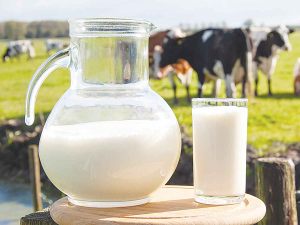
Synlait is planning to enter the domestic market with a range of products, initially white milk, to be retailed by Foodstuffs under the Everyday Dairy brand.
John Penno says the domestic market was worth about $2 billion at a wholesale level.
“It is an important market for a company of our size, one that we believe we will be able to develop over some time to become an important part of our overall portfolio.
“It starts with the relationship that we have started with Foodstuffs but we intend to grow into a range of products alongside that liquid product, and products that will in time open up export opportunity.”
A revolving door of chief executives at milk processor Synlait is a warning sign, says Lincon University senior lecturer in agribusiness Nic Lees.

Troubled milk processor Synlait has lost its third chief executive in five years.
Two major acquisitions in the New Zealand dairy sector were completed this week.
OPINION: Synlait's latest half-year result reveals a serious problem at the heart of the business: its core operations are no longer bringing in enough revenue to cover the cost of production.
OPINION: Synlait's woes show no sign of ending anytime soon.
New Zealand dairy farmers are set to be the first in the world to receive access to a new digital physical milk pricing tool that enables them to fix the price for their physical milk.
State farmer Pāmu is opening its farm gates this summer in an effort to give the rural sector the opportunity to see how large-scale, multi-system farming is delivering productivity and profitability across New Zealand.
A five-year study has found that the cost of reducing emissions without technology may be significant and unsustainable for Northland dairy farmers.
DairyNZ says Waikato farmers need certainty on Plan Change 1, but they say that certainty must be matched with practical, workable rules and a clear transition that doesn't get ahead of the new resource management system currently under review.
While the Government has moved quickly to make commercial hauliers' lot easier during the current fuel crisis, they appear to be stuck in the creep box when it comes to the agricultural industry.
Waikato farmers have been told that the Government’s new planning system legislation and the region’s Plan Change 1 (PC1) “won’t mesh together very well”.