Fonterra FY26 Results: $9.69 Milk Price, $3.4bn Profit
Fonterra has unveiled its annual results for the 2026 financial year, posting $27 billion in revenue and close to $20 billion returned to New Zealand farmer owners and unit holders.
 increase font size
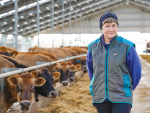
 Fonterra Farm Source group director Richard Allen.
An on-farm plastic recycling initiative, Plasback, seems to be gaining momentum as the agricultural industry moves to reduce its environmental impact.
Two New Zealand silage wrap importers, Nutritech and Tulloch Farm Machines, have joined the scheme. The Plasback scheme is a voluntary, user-pays system which collects silage wrap and some chemical drums direct from the farm gate.
"Last year, the Ministry for the Environment decided that all farm plastics sold in this country will have to be covered by an accredited product stewardship scheme," says Plasback manager Chris Hartshorne.
"This means everyone in the farm plastics supply chain - from manufacturers through to consumers - will be responsible for recycling leftover plastic products and packaging."
The company says that joining the Plasback scheme is a step dairy farmers can take to meet the criteria for production under Fonterra's new Co-operative Difference framework.
Under the scheme, from 1 June, up to 10 cents of a farm's milk payment will be determined by its sustainability measures and milk quality.
Fonterra Farm Source group director Richard Allen says Fonterra farmers are among the world's most responsible and that is something to be proud of.
"The Co-operative Difference payment is another way we can recognise farmers and grow the value of New Zealand milk by responding to the worldwide demand for sustainably-produced dairy," Allen says.
The 10 cent Co-operative Difference payment is made up of 7 cents/kg of milk solids for achievement in four sustainability focus areas. Once they have achieved this, farmers can gain another 3 cents/kgMS for milk that meets Fonterra's excellence standard.
The four sustainability criteria cover the environment, co-op and prosperity, animal wellbeing, and people and community.
Fonterra has unveiled its annual results for the 2026 financial year, posting $27 billion in revenue and close to $20 billion returned to New Zealand farmer owners and unit holders.
Fonterra Co-operative Group has confirmed the independently assessed candidates standing for election to its board in 2026.
Fonterra has revised its Farmgate Milk Price forecast for the 2026/27 season, lifting the midpoint and narrowing the range on the back of improving global dairy commodity prices.
Outgoing Fonterra Co-operative Council chair John Stevenson says that it has been a privilege to represent the co-op's farmer shareholders.
Environment Minister Nicola Grigg has announced details of a new rural plastics recycling scheme.


Federated Farmers says it welcomes Labour's commitment to reviewing the Sharemilking Agreements Act, calling on other major parties to do the same.
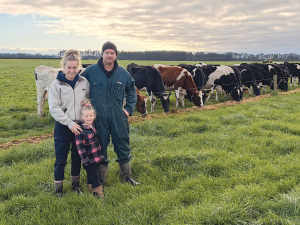
For Canterbury dairy farmers Sian Meijer and Rick Wobben, wearable technology has become one of their most valuable on-farm tools - helping manage 1850 cows across an expansive, high-performing dairy operation while improving efficiency, mating outcomes and day-to-day decision making.
Fonterra has unveiled its annual results for the 2026 financial year, posting $27 billion in revenue and close to $20 billion returned to New Zealand farmer owners and unit holders.
The first major update to the Dairy Cattle Code of Welfare in more than a decade has been released, marking what DairyNZ describes as an important step in ensuring animal welfare standards continue to evolve alongside scientific evidence and on-farm realities.
Ravensdown shareholders have elected Jane Montgomery and Kate Acland to the Ravensdown Board for three-year terms, following a closely contested director election.
Federated Farmers says new legislation replacing the Resource Management Act will cut red tape, unlock investment and help grow New Zealand's export-led economy, after the Planning Bill and Natural Environment Bill passed their third reading in Parliament yesterday.