What Would Synlait Be Worth to Fonterra or a2 Milk?
Speculation of a possible joint move by Fonterra and a2 Milk to buy Synlait raises a much bigger strategic question, says agribusiness expert Dr Nic Lees.
 increase font size
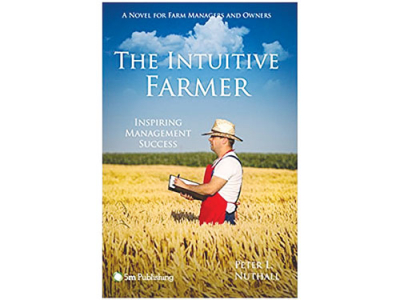 The research examines how farmers make their decisions, the role intuition plays and how it can be improved.
A Lincoln University researcher investigating the role of intuition in farmers’ decisionmaking has had his work published in a scientific journal and as a novel.
Dr Peter Nuthall and Dr Kevin Old, from the department of land management and systems, have been examining how farmers make their decisions, the role intuition plays and how it can be improved.
Their analysis of farmers’ intuitive decisionmaking is published in Journal of Rural Studies (‘Intuition, the farmers’ primary decision method. A review and analysis’), and Nuthall has published a novel on the same theme.
His novel, The Intuitive Farmer: Inspiring Management Success, tells of a group of farmers who meet to discuss management challenges and skills associated with intuition. Guided by meeting facilitators, the farmers sort out each other’s decision problems, learning and taking on board the lessons. And a new novel will guide farmers through the process of modifying their management style.
The book is available through most international online book sellers, including its publisher 5M.
Nuthall and Old gathered data from at least 700 farmers.
“Farmer intuition has never been analysed to this extent before,” said Nuthall.
The research showed that farmers base most decisions on their intuition. They do not formally analyse each decision but use their mental powers to decide what to do.
“Sometimes a decision is instantaneous, but in others a range of thought levels are brought to bear before acting. Good decision intuition is not a mysterious process,” said Nuthall.
“Profit and other assessments show some farmers are good intuitive decisionmakers, others not so good.”
Farmers with little experience, whether or not they are naturally intuitive, found it difficult to make good decisions.
Nuthall said the intuition process often uses ‘pattern matching’, in which the brain uses experience to match past events with a current problem requiring a decision.
“The farmer [then intuitively] comes up with what the brain believes to be the correct action.”
However, intuition was more than just pattern matching.
“Intuition develops with a farmer’s thought process, self-criticism and review.”
The new research showed how farmers can improve their intuition, he says.
Speculation of a possible joint move by Fonterra and a2 Milk to buy Synlait raises a much bigger strategic question, says agribusiness expert Dr Nic Lees.

Lynnette Hudson's 30-year obsession with Pinot Noir was sparked working vintage in Burgundy, seeing how subtle changes in terroir were expressed in the glass. It was, she says, "an elightening moment in every way".
A four year trial has reaffirmed that mixing plantain into dairy pastures can help reduce nitrogen losses to freshwater while maintaining milk production and profitability, say researchers.
Twenty five secondary school students from around New Zealand recently completed a three day residential programme designed to explore career opportunities across the food and fibre production supply chain.
A Lincoln University student is set to become the first person to contest both the Young Viticulturist and the Young Winemaker national titles in one year.

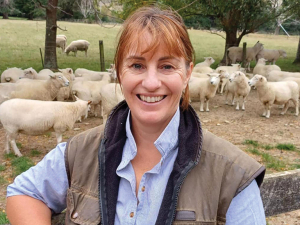
B+LNZ's Wormwise veterinarian Mary Bowron has won the Best Sheep and Beef Vet of the Year Award in recognition of her outstanding contribution to New Zealand’s sheep and beef sector.
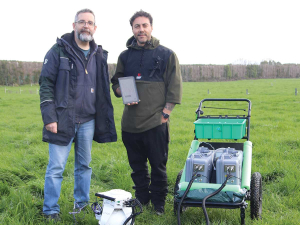
Researchers at Massey University are using a special piece of scientific equipment to improve the measurement of greenhouse gas emissions from pasture soils.
More signs of a booming kiwifruit sector.
OPINION: David Seymour and James Meager's plan to make it easier for farmers and orchardists to operate drones can best be described a 'courageous' move.
New Zealand wool is reaching new heights as air filtration companies move away from synthetic products to biodegradable alternatives.
Opuha Dam's ability to protect South Canterbury communities from major flooding has taken a significant step forward, with Opuha Water Limited (OWL) successfully commissioning a new outlet valve capable of releasing record volumes of water from the dam ahead of a weather event.