Milk Powder Prices Prop Up Farmgate Milk Price
Milk powder prices are keeping farmgate prices up, helping processors offset the dip in milk fat prices.
 increase font size
 The average price of butter slipped 12% on the GDT last year.
Incomplete deliveries and logistics disruptions were common issues for the 300 bidders on Global Dairy Trade auctions last year.
According to GDT’s 2020 annual report, some manufacturers are still experiencing disruptions to their manufacturing process.
The report reflects the impact of Covid on dairy prices last year with 12-month average prices mixed compared to 2019: anhydrous milk fat (AMF) was down 21.9%; butter down 12.2%; and whole milk powder down 4.4%. Only skim milk powder recorded a rise of 5.6%. AMF reached a 48-month low of US$3,742/MT in August 2020.
GDT director Eric Hansen says in 2020 the world was dealing with an unprecedented pandemic.
He says Covid-19 highlighted the value of price discovery platforms such as GDT events.
“With many countries forced into lockdown and supply-chain and foodservice sectors significantly disrupted, we were fortunate that our online GDT trading platforms continued to attract consistent participation from our bidders and sellers.
“GDT events served an essential role in providing price transparency and clarity about international dairy prices, allowing sellers and buyers to continue safely trading core dairy ingredients.”
Last year, 25 GDT events were held, resulting in 678,076 MT of products traded.
Hansen notes that because of its price discovery role, GDT events was designed for large volumes of the same general trade specifications to be traded repeatedly over time.
“Creating a focal point, our trading events attract a large, geographically diverse pool of buyers, with our top traded products SMP, WMP and AMF each attracting over 100 unique bidders annually.
“This has provided an excellent base to withstand the abnormal shocks that have occurred over recent years, such as the Japanese tsunami and nuclear incident in 2011, the Russian ban on dairy imports in 2014, and now of course the Covid-19 pandemic.
“Covid-19 has been unusual in that it initially had big impacts on both demand and supply simultaneously, causing great uncertainty for buyers and sellers in trying to anticipate price shifts, and therefore the best time to trade.”
Many businesses were significantly impacted around the globe through challenges such as global supply chain disruptions and decreased foodservice and consumer demand.
A recent survey conducted by GDT found that incomplete deliveries was the most common issue encountered along with disruptions with logistics providers.
“Our customers are still experiencing disruptions to their manufacturing process and to offset these impacts in international trade, many businesses have created new local supply relationships,” he says.
Hansen says GDT’s underlying purpose is ensuring buyers and sellers can trade with confidence in global and regional dairy markets.
“Our vision is to be the world’s preeminent trading platform for global and regionally traded dairy products, delivering highly credible prices on par with the most advanced trading platforms globally.”
GDT is run by a 10-member oversights board. Covid prevented the board from meeting in person last year, limiting the discussion of “substantive matters”, says chairman Bill Shields.
“Members agreed that the continuing uncertainty arising from government and corporate responses around the world to Covid-19 makes it undesirable to significantly change its membership at this time, as could occur under the normal timing for the selection process specified by the charter,” says Shields.
The board also agreed to extend its term by another 12 months in view of Covid-related disruptions. Apart from Shields the current membership includes three members in each of the buyer, seller and financial groups.
Fonterra, which launched GDT 12 years ago, is represented on the board by director central portfolio management Bruce Tanner.
Milk powder prices are keeping farmgate prices up, helping processors offset the dip in milk fat prices.
OPINION: With 10,500 dairy farms, New Zealand continues to punch above its weight around the world.
A milk glut around the world shows no sign of easing, putting downward pressure on farmgate milk prices for the next few months.
Fonterra has reduced its forecast 2026/27 Farmgate Milk Price.
New Zealand dairy farmers are set to be the first in the world to receive access to a new digital physical milk pricing tool that enables them to fix the price for their physical milk.


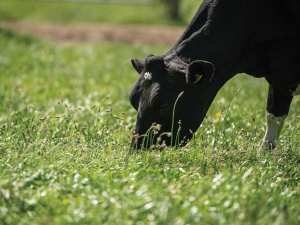
Farms across the upper North Island are trialling different pasture mixes as part of a research programme that aims to build greater resilience into farming systems.
Election years are always a concerning time for farmers, according to DairyNZ chair Tracy Brown.
The Ballance Farm Environment Awards are coming to the West Coast of the South Island.
Most dairy regions around the country have had a pretty good season so far says Tracy Brown.
Rural leader Mark Hooper has been appointed as an independent director to the NZPork board, bringing extensive farming, governance and advocacy experience to the role.