Fonterra Names Four Independently Assessed Director Candidates
Fonterra Co-operative Group has confirmed the independently assessed candidates standing for election to its board in 2026.
 increase font size
 600 year-old waka discovered near the Anaweka estuary on the North West tip of the South Island.
The University of Auckland, Manawhenua ki Mōhua iwi and Fonterra have embarked on a collaborative project to preserve a 600 year-old waka – one of the South Island's most culturally significant discoveries.
The conservation partnership was initiated after the local Nichols family discovered the ancient waka near the Anaweka estuary on the North West tip of the South Island.
Manawhenua ki Mōhua iwi says the waka has attracted attention because of its detailed length of New Zealand matai and its extraordinary carving in the shape of a sea turtle on the hull.
"Turtle images are rare in pre-European carvings in New Zealand, suggesting the canoe's Polynesian ancestral origins, with its last estimated journey around 1400AD. This was no small find, spanning just over six metres in length and 85 centimetres at its widest point (Johns 2014).
"We are pleased that Fonterra has recently joined forces with us on this important on-going project, providing the new home for the canoe for the duration of its restoration."
Fonterra's upper south operations manager Chris Win says the cooperative was approached by elders from the local iwi to discuss the possibility of utilising one of the Takaka site's buildings to house the waka.
"Given the importance of the discovery and the three years needed to restore it, the kaumatua were looking for somewhere big and secure where they could work on the waka – something we were proud to accommodate. Housing this waka has given our site the opportunity to be involved in an amazing piece of cultural history that is of great significance to our community.
"To witness the level of ownership, pride and understanding our staff have shown in this community project over the past few months has been extremely rewarding for everyone involved."
University of Auckland Professor Dilys Johns has conducted a series of detailed conservation assessments over several months and planned a variety of treatments to provide structural strength to the wood, increasing the waka's longevity.
"We have recently completed removal of chlorides and begun the next phase of treatment, providing stability for the degraded waka during drying," says Johns.
"In addition to providing a unique example of pre-European maritime history, the conservation project will facilitate on-going relationships with the Manawhenua ki Mōhua iwi, local community, Fonterra and University of Auckland."
This conserved piece of Māori heritage will be available to the public for viewing once treatment is complete and a suitable venue for exhibition has been decided.
Fonterra Co-operative Group has confirmed the independently assessed candidates standing for election to its board in 2026.

Fonterra has revised its Farmgate Milk Price forecast for the 2026/27 season, lifting the midpoint and narrowing the range on the back of improving global dairy commodity prices.
Outgoing Fonterra Co-operative Council chair John Stevenson says that it has been a privilege to represent the co-op's farmer shareholders.
OPINION: It seems Canterbury processor Synlait is still in the doldrums.
OPINION: Get offside with New Zealand First leader Winston Peters at your own peril.


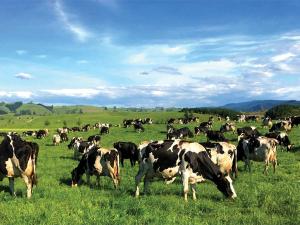
The first major update to the Dairy Cattle Code of Welfare in more than a decade has been released, marking what DairyNZ describes as an important step in ensuring animal welfare standards continue to evolve alongside scientific evidence and on-farm realities.

Ravensdown shareholders have elected Jane Montgomery and Kate Acland to the Ravensdown Board for three-year terms, following a closely contested director election.
Federated Farmers says new legislation replacing the Resource Management Act will cut red tape, unlock investment and help grow New Zealand's export-led economy, after the Planning Bill and Natural Environment Bill passed their third reading in Parliament yesterday.
Leading figures from the major political parties will be questioned on their primary sector policies at the Rural Issues Debate at Mystery Creek Events Centre, Hamilton, on 30 September.
OPINION: Have a plan in place now!
Beef + Lamb New Zealand (B+LNZ) says it welcomes the passage of the Natural Environment Bill and Planning Bill, calling the bills a positive step for sheep and beef farmers.