Anlene Returns to China Under Lactalis Ownership
A former Fonterra Brands product, Anlene, is making its return to China.
 increase font size
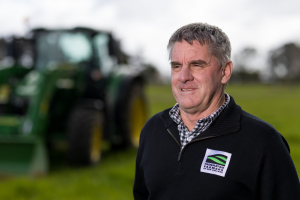
 Marlborough farmer Murray Beach has submitted a remit for Fonterra’s board meeting next week, proposing a new share system.
Marlborough farmer Murray Beach wants a new share system for Fonterra.
Beach has submitted a remit for Fonterra’s board meeting next week, proposing a new share system.
His proposal says that Fonterra must initiate, within three months, a formal co-op wide discussion regarding the existing share system.
Beach is proposing a new share system that will “make all suppliers equal”.
However, the Fonterra board and Shareholders Council oppose the proposal. Fonterra shareholders are now voting on the proposal and the results will be announced at its annual meeting in Lichfield next week.
Beach says when Fonterra stopped paying redemption to farmer shareholders leaving the co-op, “it left outsiders to buy up those shares from the people jumping ship”.
“This has caused the same amount of shares to be out there but the value-add pool has decreased due to the loss of milk,” Beach says.
“So the shares are staying the same and the value-add pool is decreasing through loss of milk and will continue to do so unless we change the system to stop people leaving.”
Beach questions what will happen if Fonterra loses 15% milk supply over the next 5 to 10 years? This could put Fonterra down to 65%, he says.
“That’s pretty scary with 21,400 employees and the same overheads. I can’t see that lending towards high milk prices.
The problem is the high share price, it encourages people to leave. The second problem is there are too many shares.
“If we fix the share price, it stabilises the price, it can’t go up or down, so it stabilises your security as well. You know exactly where you are from year to year. The issue is, are you milking cows or playing a share market?”
Under Beach’s proposal for example, if a farmer has 100,000 shares at $5.50, worth $550,000, he proposes changing these to $2 shares, giving the farmer 275,000 $2 shares.
The farmer must keep 100,000 shares worth $2.00. These could be called his milking quota shares.
This farmer still has 175,000 shares worth $2.00 that he can sell or transfer. We’ll call these his saleable/transferrable shares. The saleable/transferable shares can only be sold to a Fonterra farmer.
If the farmer increases production by 10,000 Milk Solids, he can transfer 10,000 of his saleable/transferable shares to his milking quota shares.
This will give him 110,000 milking quota shares and reduce his saleable/transferable shares to 165,000.
The outsiders’ shares, known as the units could be changed to$2.00 shares and the dividend will have to be honoured on them.
All existing schemes, 6 years to share up, 10 years to share up, contract milk and MyMilk to be replaced by the $2 share over a period of time, say 3 years.
These can be bought from any farmer wishing to sell some of his saleable/transferable shares. Beach believes his proposal has the support of many shareholders.
A former Fonterra Brands product, Anlene, is making its return to China.
Fonterra farmers are happy to see the board tackle the issue of shares from former milk suppliers.
Milk powders are continuing their merry run on the Global Dairy Trade (GDT) platform, firming up a $10-plus milk price for this season.
For the second time in three weeks, Fonterra has lifted its farmgate milk price, on the back of soaring milk powder prices.
Fonterra chief executive, Richard Allen says being resilient has helped the dairy industry overcome extreme volatility in recent years.
Worst election result imaginable for New Zealand and not good for business confidence.
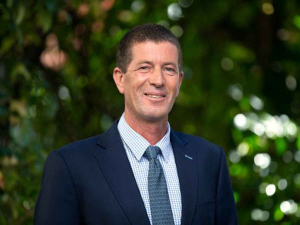
Associate Agriculture Minister, Mike Butterick has lost his Wairarapa seat in the final count released today.
Women across the dairy sector have an opportunity to invest in their leadership, education and professional development, thanks to a scholarship fund.
Three of New Zealand's leading primary sector organisations have joined forces to propose a new Food and Fibre Private Training Establishment (PTE).
OPINION: The World Dairy Summit, held in Auckland last week, delivered a poignant message – when it comes to global trade, the old order has passed away.
Deer Industry New Zealand (DINZ) has welcomed Government co-investment in a new $10 million programme aimed at increasing the value of New Zealand farmed venison, velvet and co-products and improving returns to deer farmers.