
Federated Farmers Praises Labour's Emissions Tax Backdown
For the first time in a quarter of a century, Federated Farmers has something positive to say about the Labour Party’s climate change policy leading into a general election.
 increase font size
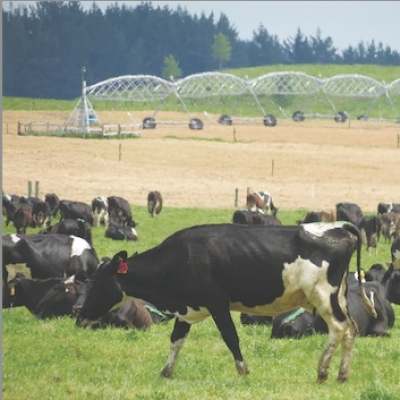 Some farmers are worried about water allocation.
FEDERATED FARMERS is to discuss with Landcorp the possibility that as many as 60 dairy farmers in the Upper Waikato River catchment may not have enough water to wash down their dairy sheds.
This is because the land owner, Wairakei Pastoral, now converting large tracts of former forestry land into dairy farms, has been allocated most of the available water in the Upper Waikato catchment. Landcorp is doing the conversions for Wairakei.
Federated Farmers Rotorua/Taupo president Alan Wills acknowledges Wairakei Pastoral, via the consenting process, got rights to the water legitimately by getting in ahead of local farmers. The process of allocation is in its final stages.
Wills says long-time local farmers fear they may go short of water because of Wairakei Pastoral’s likely allocation. He and National Feds president William Rolleston hope a deal can be reached with Landcorp.
“The Wairakei Pastoral Landcorp partnership needs to be part of the solution,” Wills says. “Every farmer has to have consent to use water for cleaning stock sheds. Stock water and domestic water is guaranteed but the problem is with water for irrigation and shed wash-down. We believe 40-60 farmers could have insufficient consents for the water to run their cowsheds. Those farmers are living with a lot of uncertainty and are quite unsettled. Somehow water is going to have to be found for them.”
Technically Wairakei Pastoral has done nothing wrong, Wills says, but he questions the ethics involved, “as when someone with a surplus of food takes it somewhere and invites people to help themselves according to their needs. In such a case the first person there has taken everything and left nothing for the others.”
Wills, whose family has been 60 years in Reporoa district, queries some of the conversions. Because a lot of the land was brought into production years ago using lucerne, ordinary pasture doesn’t always work despite irrigation, he says. Time is needed to build up humus in the soil, during which nitrogen leaching can be a big problem. He intends to query this with Landcorp.
Wills says he and other farmers are concerned that the $80 million dollars spent to clean up Lake Taupo may be for nothing when the water leaves the lake if there is large scale dairy conversion in the Upper Waikato catchment.
The welfare of the Waikato River is now a priority, he says. With the beef market going through a purple patch and good money being paid for grazing dairy heifers he thinks there are alternatives to converting forest to dairy farming.
“Given these options and Landcorp’s huge resources, surely they can do something else without burdening other farmers in the Upper Waikato with water allocation and nutrient discharge issues.”
We want to talk – Landcorp
LANDCORP CHIEF executive Steven Carden says while he is aware of Federated Farmers’ concerns about water allocation, it is the regional council that oversees this.
He told Dairy News that Wairakei Pastoral, as the owners of the land in question, applied for consent for the water in 2011 and were granted this in 2012. The water is chiefly for stock to drink and for shed wash-down, with some provision for irrigation. Only about 14% of the Wairakei estate is irrigated, he says.
“The owners have followed a process in getting the water. How we deal with the overall water allocation is something the industry, Landcorp and Wairakei Pastoral will have to… work out. It’s certainly not Landcorp’s aim to see people disadvantaged.”
Carden says the meeting with Federated Farmers in early December will be part of a wider dialogue between Landcorp and its stakeholders. Landcorp wants to be open about what it is doing, give others opportunity to engage and see what can happen as a result of talking.
For the first time in a quarter of a century, Federated Farmers has something positive to say about the Labour Party’s climate change policy leading into a general election.

Rural leader Mark Hooper has been appointed as an independent director to the NZPork board, bringing extensive farming, governance and advocacy experience to the role.
A partnership between state-owned enterprise Pāmu (Landcorp Farming Limited) and charity Meet the Need is putting more than quality New Zealand beef into food bank parcels this year.
There's been widespread support from the primary sector for the Government's announcement on changes to freshwater farm plans that come under the Natural Environment Bill, which is now set to replace the existing RMA.
The terrible floods that hit the Wairarapa may have subsided, but the danger to farmers still exists, according to local Federated Farmers president Rob Hickson.



Seed and grain companies share the concerns of arable farmers about the viability of their sector, says Seed and Grain New Zealand chief executive Dr Sarah Clark.
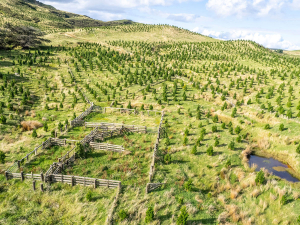
The New Zealand Institute of Forestry (NZIF) says unnecessary changes to New Zealand’s Emissions Trading Scheme (NZ ETS) will seriously erode investor confidence and result in significant reductions in forest planting rates.
For the first time in a quarter of a century, Federated Farmers has something positive to say about the Labour Party’s climate change policy leading into a general election.
A warning for New Zealand seed and grain companies – be prepared for an exodus of farmers from the arable sector.
Now in its fourth year, the 2026 Fencing Industry Awards, formed part of the proceedings of the FCANZ Conference, held in Nelson during August.
DairyNZ deputy chair Cameron Henderson has been re-appointed unopposed for another term.