DCANZ Urges Next Government to Back Dairy Export Growth
Dairy processors are ready to further boost New Zealand’s export earnings but want the incoming government to match their ambition with good policy.
 increase font size
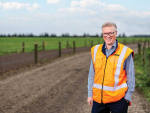
 DCANZ chairman Matt Bolger
Dairy processors are happy with the Government’s move to reduce redtape for exporters.
The Dairy Companies Association of New Zealand (DCANZ) says the proposals to remove the requirement for individual exemptions will remove a long-standing and self-inflicted barrier to trade.
The need for exemptions has been a handbrake on dairy exporters pursuing new value-added markets and product opportunities, says DCANZ chairman Matt Bolger.
Dairy exporters currently need to apply for an exemption where the composition of the product being exported differs from the relevant New Zealand standard. Compositional requirements for products often differ between New Zealand and export markets with each country’s food regulators determining the appropriate standards for product to be sold in their domestic market.
For example, the levels of vitamin D differs between the New Zealand and China infant formula standards, due to the differing levels that infants in each country receive from other sources.
DCANZ has advocated that the New Zealand requirement for exporters to apply for exemptions unnecessarily second guesses the regulatory competence of other countries. New Zealand now has over 400 market and parameter specific exemptions for dairy exports with the potential for each of these to require updating when either New Zealand or third country standards change.
Exemptions requirements overlook the fact that New Zealand dairy exporters operate under independently verified risk management programmes. The Animal Products Act 1999 requires that dairy exporter risk management programmes document the measures taken, in compliance with New Zealand processing requirements, to produce safe and suitable products which meet the relevant country of sale requirements.
New Zealand is unique in the exemption requirements that it currently imposes upon its dairy exporters.
“We are pleased the Government has listened to dairy exporters concerns. Addressing them will ensure New Zealand has a regulatory framework that better facilitates the export of high-quality, safe and suitable dairy products so dairy companies can continue growing their contribution to the economy.”
Dairy exports account for one in every four dollars New Zealand earns from all goods and services trade.
DCANZ will be assessing and providing feedback on the options put forward in the consultation document.
Dairy processors are ready to further boost New Zealand’s export earnings but want the incoming government to match their ambition with good policy.
American butter undercutting New Zealand's own product on New Zealand supermarket shelves appears to be a case of markets working as they should, says Dairy Companies Association of New Zealand (DCANZ).
Primary sector leaders have welcomed the announcement of a Free Trade Agreement between India and New Zealand.
There is nothing more important to New Zealand than agriculture, says Prime Minister Christopher Luxon.


Farmlands has reported higher operating earnings and a profit before income tax of $4.5 million, up 118.9%, for the year ended 30 June 2026.
AgriZeroNZ has invested a further NZ$17.7 million in methane vaccine developer ArkeaBio and NZ$5.1 million in BioLumic, a New Zealand-founded company that uses ultraviolet light to develop low-emissions pasture..
Good news for Fonterra farmers. The co-op has raised this season’s farmgate milk price mid-point by 25c to $9.75/kgMS.
OPINION: Political parties are getting plenty of advice and recommendations from sector groups as the election approaches.
In farming there are external factors that can influence behaviour of a whole herd, such as a bad weather event, triggering false positive heat detections or health attentions.
For Canterbury dairy farmer Cameron Henderson, supporting Meet the Need comes down to a simple question: how can the success of New Zealand farming benefit more than just those within the industry?