Dairy Farmers Urged to Strengthen Beef Partnerships
Dairy farmers need to be high quality partners to the beef industry, says Prem Maan, the co-founder and executive chairman of the dairy corporate Southern Pastures.
 increase font size
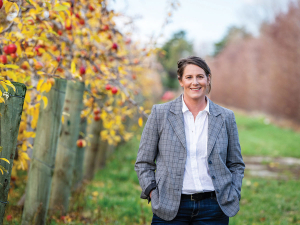
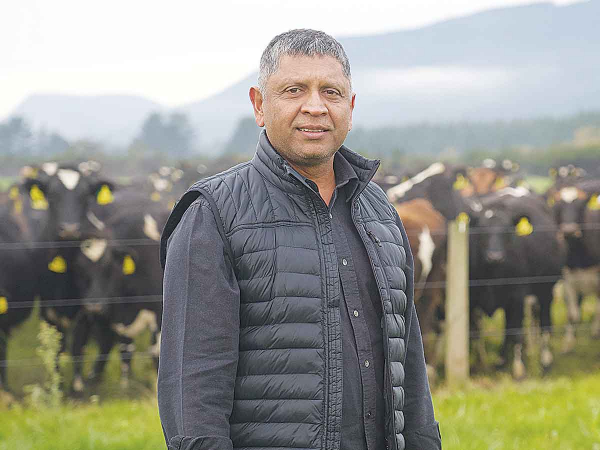 Prem Maan, Southern Pastures’ executive chairman says their farms have a massive programme to sequester carbon and reduce greenhouse gas emissions.
Corporate dairy farmer Southern Pastures has been judged to be a responsible investment leader for the seventh year running.
The company, which owns 19 dairy farms in Waikato and Canterbury and is the owner of premium dairy brand Lewis Road Creamery and wholesale business NZ Grass Fed Products LP, says it remains the only organisation from New Zealand's agriculture and food sectors to ever be included in the annual benchmark report released by the Responsible Investment Association Australasia (RIAA).
"So often the pastoral industry is judged by outputs such as emissions, but we're not nearly as rigorously measured or assessed for the positive services that some of us provide," says Prem Maan, Southern Pastures' executive chairman.
"On our farms, we have a massive programme of work underway to sequester carbon and reduce our greenhouse gas emissions and foster biodiversity through, for example, good soil management, native plantings, and animal feed.
"We also act at executive level as strong stewards for more sustainable and resilient assets and markets. The RIAA benchmark is one way these positive efforts are independently recognised," says Maan.
RIAA represents investors with assets under management of over US$29 trillion, including NZ Managers who represent $328 billion.
Southern Pastures produces milk under its independently-audited 10 Star Certified Values standard, which covers stringent grass-fed, free-range, climate-change mitigation, human welfare, animal welfare, and sustainability requirements.
It doesn't feed cows imported palm kernel expeller (PKE), claiming its production contributes to loss of rainforest and biodiversity.
It also refuses to trade in carbon credits or offsets to achieve its zero carbon ambitions, but is committed to long-term farming techniques such as low tillage and deep-rooted plants that capture and store carbon from the atmosphere. It's also trialling and measuring numerous other initiatives such as biochar, dung beetles and prebiotics, as well as retiring land to native plantings.
"Soil can hold up to three times the amount of carbon than the atmosphere and all plant combined," says Maan.
"We think a positive approach to preserving carbon in our soil is potentially part of the answer to mitigating climate change.
"It's a shame that carbon sequestraction through on-farm soil management, native plantings and biodiversity is not prioritised in New Zealand over monoculture exotic trees."
Dairy farmers need to be high quality partners to the beef industry, says Prem Maan, the co-founder and executive chairman of the dairy corporate Southern Pastures.
A New Zealand dairy industry leader believes the free trade deal announced with India delivers wins for the sector.
Speciality milk producer Lewis Road Creamery is celebrating its 10th anniversary of iconic chocolate milk with a new flavour.
Premium dairy brand Lewis Road Creamery is celebrating a decade since the country went crazy for its iconic fresh chocolate milk.
One of New Zealand's largest dairy farmers won the 2024 'Food, Beverage and Fibre Producer' award at the NZ Primary Industries Awards.


National’s pledge to introduce 19 new national standards shows the party is serious about getting Wellington out of farming, Federated Farmers says.
The National Party’s policies to make it easier to grow fresh vegetables, secure reliable water and energy and simplify farm planning are practical changes that will give growers the confidence to invest, according to Horticulture New Zealand (HortNZ).
Fonterra Co-operative Group chief financial officer Andrew Murray has resigned to take up a role outside the dairy giant.
A major move is about to get underway to improve the quality and viability of dairy beef and cattle in NZ.
Veterinarians say changes to the code of welfare for dairy cattle provides a positive foundation for improved cattle welfare across the country.
Today, 15 October, is the International Day of Rural Women, which recognises rural women’s contribution to farming, communities and the environment.