India FTA Removes 33% Tariff on NZ Sheepmeat
New Zealand’s red meat sector has welcomed the India-New Zealand Free Trade Agreement taking effect, which removes India’s 33% tariff on New Zealand sheepmeat.
 increase font size
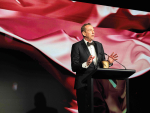
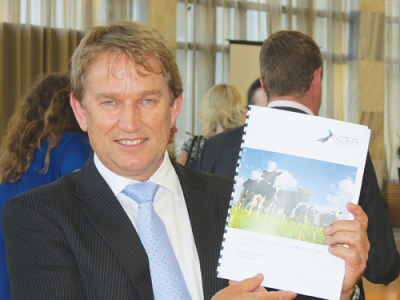 DCANZ chairman Malcolm Bailey with the report.
New Zealand could be $1.3 billion better off if all tariffs on our dairy exports were lifted, according to an economic report on the NZ dairy industry.
Commissioned by the Dairy Companies Association of NZ (DCANZ) and prepared by the NZ Institute of Economic Research (NZIER), the reports sets out the massive contribution the dairy industry makes to NZ’s national and regional economies.
It notes that the industry contributes $7.8b or 3.5% to NZ’s GDP, employs 40,000 people on farms and processing facilities and in three areas, Southland, Waimate and Otorohanga, provides one in five jobs. In Matamata-Piako, South Taranaki, Hauraki, Waipa, South Waikato, Clutha and Kaipara the industry provides one in 10 jobs.
The report also shows the contribution dairy farmers make to the general economy, noting that they are spending just over $12.2b on a range of goods and services in their communities to support their operations.
As for regional economies, in Southland the dairy sector accounts for 14.8% of the economy, West Coast 11.5%, Waikato 10.9%, Taranaki 8% and Northland 6%.
DCANZ chairman Malcom Bailey says the report was commissioned because some people are questioning the importance of the dairy sector to the NZ economy given a couple of years of lower prices and a volatile international market combined with a move away from trade liberalisation. The report was launched at a function at parliament last week before an audience of primary sector representatives, diplomats and government officials.
“The report is aimed at informing the people of NZ about the sector and fostering support for greater trade liberalisation. If we can get trade barriers removed, there is a big prize awaiting NZ. Trade barriers are supressing the value of our dairy exports. Removing trade barriers will allow New Zealand’s dairy sector, ultimately, to maintain and build sustainability and value-adding momentum,” says Bailey.
One challenge, Bailey admits, is getting the message to the wider public about the positive things the industry is doing, e.g. farmers’ huge spending on sustainability on their farms.
“We are in much better shape than we were ten years ago but I am not sure we are getting the credit for that.
“I can assure you the farming sector and the dairy processors are totally on board which we think are the views of wider NZ in that we want to have our environment in better shape.
“Good communication is the key, but of course we live in a society where getting people’s attention is not always easy and a social media story which is off the mark, capture their attention.”
Primary Industry Minister Nathan Guy praised the investment dairy farmers have made in sustainability and he noted the huge importance of dairying to the regions.
“One sentence sums up the importance of the industry to the regions: ‘when dairy farmers are smiling, the regions are smiling’. How true that is.”
John Ballingall, who co-authored the report, says that in the five years since they did the last report, the dairy sector has continued to grow its employment and exports.
A positive trend is the greater degree of diversification and value add products, “such as ice creams and infant formula – a diversification from basic commodities -- is very encouraging.
He noted there are now 1800 jobs in the dairy processing industry in Auckland. “I’m not sure many Aucklanders would know that.”
New Zealand’s red meat sector has welcomed the India-New Zealand Free Trade Agreement taking effect, which removes India’s 33% tariff on New Zealand sheepmeat.
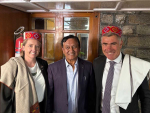
New Zealand's role is not to compete with Indian growers, according to NZ Apples and Pears.
The red meat sector is in great heart.
OPINION: The stats speak for themselves.
Testing confirms H5 bird flu in a single northern giant petrel, found dead on a remote Cape Palliser beach in the Wairarapa, says Dr Mary van Andel, the Ministry for Primary Industries' (MPI) Chief Veterinary Officer.


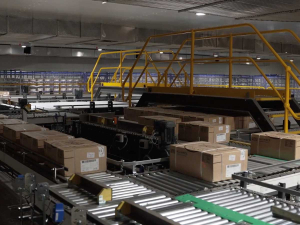
Alliance is calling for final applications for its 2027 Graduate Programme, with applications closing on Sunday 25 October.
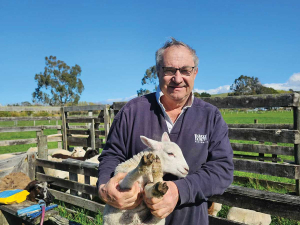
Decades piloting planes has ensured vet and farmer David Hayes is focused on safety. So, after a serious accident while welding on farm, he is sharing his experience so others can learn from it.
Canterbury milk processor, Synlait Milk has confirmed Leon Fung as its chief executive officer.
OPINION: Making it easier to collect rainwater and use it to grow crops and livestock is a no brainer.
As part of its Election 2026 coverage, Rural News asked political parties how they would help pull the arable sector out of the doldrums. Here's what they said:
Farmers are being encouraged to rethink how they manage waste on farm with the launch of ruralwastesorted.co.nz, a new website bringing together practical tips, real farmer experiences and resources.