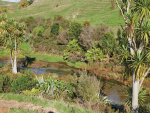
New Research Shows Good Farming Practices Reducing Nutrient Losses on Dairy Farms
Analysis of decades of research has revealed the good farming pracrtice plays a critical role in reducing nutrient losses to improve freshwater outcomes.
 increase font size
 Paul Bennett, the Bioeconomy Science Institute Maiangi Taio’s integrated bioenergy portfolio lead.
Could New Zealand use its unproductive land to help solve possible fuel insecurity in New Zealand? Scientists say yes.
Paul Bennett, the Bioeconomy Science Institute Maiangi Taio’s integrated bioenergy portfolio lead, says New Zealand has up to three million hectares of unproductive land, including a million hectares of growing scrub.
He says that land could be converted to short-rotation forestry, providing a larger long-term supply and support demand for coal, gas and marine fuel replacements.
“Early bioenergy deployment would generate a market for further biomass production,” Bennett told Dairy News.
“Woody biomass growth can therefore be achieved without displacing food or timber or pulp production,” he adds. “This can be part of the solution for NZ’s energy security.”
According to Bennett, New Zealand could access approximately seven million green tonnes of low-grade wood for bioenergy production, including the sustainable and accessible biomass from forest harvesting operations, and low-grade industrial logs currently exported.
“This is plenty of biomass to replace the coal burnt in New Zealand and to start on the journey of aviation and marine fuels from wood,” he says.
Bioenergy improves energy security by producing fuel locally, meaning New Zealand would be less reliant on global suppliers, Bennett says.
He says there are four main reasons why the Bioeconomy Institute has been investigating bioenergy options within New Zealan – climate change; energy security and resilience; market access; and local economic development.
Currently, Bennett says the Bioeconomy Science Institute is looking at practical steps the country can take to reduce its energy insecurity.
“We are scaling up locally produced bioenergy and biofuels using existing woody biomass resources and have been working with a range of stakeholders across a range of energy sectors such as aviation, marine, processing and power generation.
“The current global fuel crisis has highlighted why New Zealand needs these locally produced sustainable fuel options as part of the solution to its energy insecurity.”
Analysis of decades of research has revealed the good farming pracrtice plays a critical role in reducing nutrient losses to improve freshwater outcomes.

Bark and ambrosia beetles could play an unexpected role in New Zealand's ecosystem, acting as tiny taxis for fungi.
Scientists from the Bioeconomy Science Institute Maiangi Taiao has achieved a successful cocksfoot-ryegrass cross capable of producing fertile seed, a world-first.
One of New Zealand’s longest-running pasture growth monitoring projects will continue, even as its long-time champion steps away after more than five decades of involvement.
A New Zealand-first native tree study has highlighted the Bioeconomy Science Institute's position as a forestry research leader.



Ballance Agrinutrients chief executive Kelvin Wickham says despite a tough year, he is pleased the business has returned to profit.
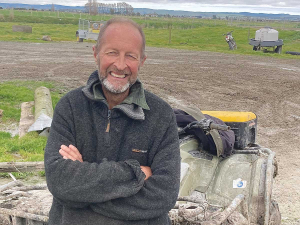
When Northland farmer Mark Cameron entered parliament six years ago, the Beehive was a lonely place.
Speculation of a possible joint move by Fonterra and a2 Milk to buy Synlait raises a much bigger strategic question, says agribusiness expert Dr Nic Lees.
I think it's going to greatly weaken National at the election. That's the view of a former senior National MP on the recent attempted coup against Prime Minister Christopher Luxon.
Despite political shenanigans in Wellington, farmers are confident that Resource Management Act (RMA) reforms will get over the line in this term of Parliament.
New Zealand's pest problem has reached crisis point, according to Federated Farmers' second National Pests Survey, which shows farmers are spending more money and effort on control — yet pest numbers keep climbing faster than they were two years ago.