
Layered Plan Needed To Fight BVD
Bovine Viral Diarrhoea (BVD) is sometimes viewed as a dairy industry issue, but the reality is that the disease can have serious consequences for beef breeding herds as well.
 increase font size
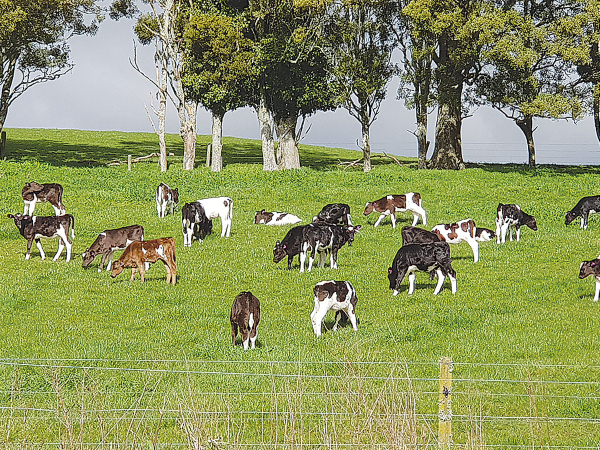 Probiotic Revolution says that while many farms are already achieving target liveweights, Calf Xtreme has enabled them to exceed those benchmarks.
The company behind probiotic additive Calf Xtreme says around 450 dairy farms are successfully rearing calves with the help of the product.
Probiotic Revolution says that while many of these farms were already achieving target liveweights, Calf Xtreme has enabled them to exceed those benchmarks.
The company claims that by incorporating the product, farmers are reaching target weaning weights about eleven days earlier. This is achieved through feeding higher volumes of milk on a once-a-day schedule within the calves’ first week.
“Calf Xtreme is avoiding scours on this high feeding regime but it’s the carry-over effects that we are even more excited about. It’s like putting icing on the cake,” says Chris Collier of Probiotic Revolution.
“We’re introducing the right microbes into the rumen, promoting better grass consumption after weaning, and there’s solid evidence of stronger resistance to worms. On heifer grazing blocks with high worm burdens, calves reared with Calf Xtreme show noticeably improved growth rates during their first summer.”
Te Awamutu farmer Nick Palairet was among the first to adopt Calf Xtreme.
“When I started rearing calves 12–15 years ago, the focus was on early weaning onto meal, which restricted early growth,” Palairet says.
“With Calf Xtreme, I can easily transition calves to 6 litres of milk once a day within a week. Last year, by grazing them at home and managing summer feed more effectively, my calves reached 280kg by June— 40kg above the target liveweight for that age."
Palairet and Collier emphasise the importance of maximising calf growth during the first 3-5 weeks of life. They point out that European research supports this, showing that better udder tissue development in very young calves translates to improved milk production later. Additionally, they advocate for calving heifers at the same liveweight as mature cows, ensuring comparable production levels.
Palairet’s herd starts calving on July 10th, and by March, most of his rising two-year-old heifers weigh around 500kg—approaching the liveweight of mature cows. His goal isn’t just to meet conventional targets but to surpass them, unlocking the full genetic potential of his heifers. To achieve this, he has for the first time this year fortified their 6-litre milk feed with 400 grams of a whey-based powder.
Palairet’s calves, bred from Friesian sires over mixed-breed cows, are thriving on this latest change. By November 20th, they were averaging one kg of growth per day from birth, weighing between 100 and 170kg — 15kg above the target for their age.
“If I want my heifers to milk as well as mature cows I need to grow better heifers. It all starts with how quickly I can accelerate their growth at a young age,” he says.
Bovine Viral Diarrhoea (BVD) is sometimes viewed as a dairy industry issue, but the reality is that the disease can have serious consequences for beef breeding herds as well.

When Simon Hales discovered triple drench resistance on his Weber farm, it was a catalyst to fast-track farm system change.
Body Condition Score (BCS) is a critical element in managing the health and reproduction of the dairy herd.
Bull management involves ensuring the right number of healthy bulls for your herd, minimising stress and reducing injury risks.
It's easy to look over a lush spring paddock and assume cows are getting enough usable nutrition. But while fast-growing pasture can give plenty of volume, in high moisture, variable dry matter and uneven mineral profile can leave real nutrition gaps when cows need it most.



Testing confirms H5 bird flu in a single northern giant petrel, found dead on a remote Cape Palliser beach in the Wairarapa, says Dr Mary van Andel, the Ministry for Primary Industries' (MPI) Chief Veterinary Officer.

"What's for dinner?" may sound like a simple question, but for many Kiwi parents, answering it has become a job in itself.
Fifty Eight years ago, on the 16th of August 1968, August Claas, the founder of the harvesting company and father of Helmut Claas, personally presented a Claas Senator combine harvester to Scottish farmer John Steven.
New Zealand consumers are paying more for beef mince than ever before, with the average retail price now sitting above $24 per kilogram, according to Rabobank.
State farmer Pamu has delivered its strongest operating result on record.
Four years since it was first detected in New Zealand, researchers and growers now know much more about management of maize pest fall armyworm (FAW).