Feedback from farmers is crucial to DairyNZ, helping it respond to farmers’ needs and fine-tune resources. A case in point is its facial eczema workshop.
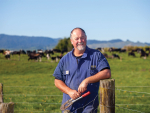
When Waikato farmer Matthew Bartleet saw two cows drop dead as he brought them in for milking one January afternoon this year, he knew he was in the middle of a facial eczema (FE) crisis.
The Matamata-Morrinsville region recorded massive FE spore counts this autumn; veterinary clinics recorded counts in the millions in many places.
“The conditions we experienced over autumn were the worst I had seen in 20 years of farming,” says Bartleet. “We had spore counts of up to three million here on Tower Road.”
Milk volumes started dropping from January and clinical signs appeared one month later -- skin cracking and blistering.
Bartleet tuned up his in-line dispensing, including checking flow rates and zinc concentrations, which helped reduce the clinical cases. But after identifying 120 cows out of 700 with clinical signs, and losing 21, he felt it was time to seek more help.
“I knew if I had FE then there would be others, and it was not going away quickly.”
Bartleet contacted his DairyNZ consulting officer Brigitte Ravera, who teamed up with DairyNZ farm systems specialist Chris Glassey to organise seminars on FE management.
The events were presented by Emma Cuttance from VetEnt Te Awamutu, whose master’s thesis on FE included examining spore count variability within a farm.
“We learned that the variability within a farm can be as great as the variability between regions; it is significant and more than you may realise,” says Bartleet.
He says a key take-home point from Cuttance’s presentation was ‘walking the walk’ in having a thorough FE prevention programme.
“Because it’s such a sporadic disease you may think year-to-year that your programme is sound, when in fact it’s slipping a bit each year, maybe in dose rate or length of treatment.”
He acknowledges his own operation suffered because of that mentality. “Our timing was right, but we needed to be more exact in our execution.”
He says DairyNZ’s presentations also gave him valuable advice for managing his affected cows.
“We worked on avoiding green feed (difficult in a system two operation) by putting them on palm kernel extract, hay and silage, and taking stress off by going to once-a-day milking.”
He believes that advice helped minimise delayed losses this spring; resulting from liver damage caused by FE; the farm lost only four cows.