Massey Uses Portable Analyser to Measure Pasture Soil GHGs
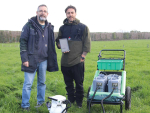
Researchers at Massey University are using a special piece of scientific equipment to improve the measurement of greenhouse gas emissions from pasture soils.
 increase font size
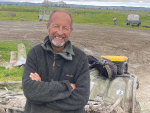
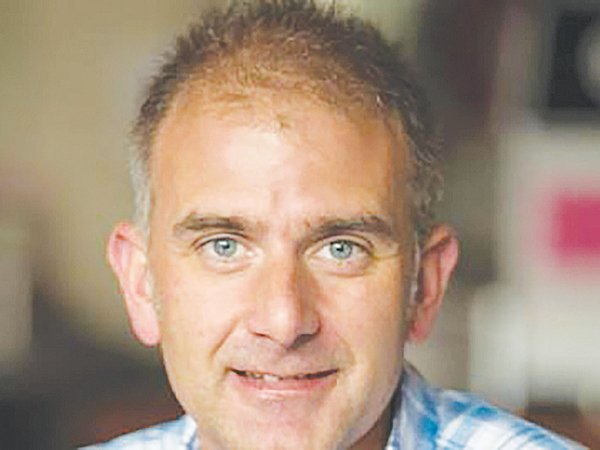 Professor Chris Anderson, Massey University.
Farmers, scientists, rural professionals and policy makers from around the country last week converged on Massey University in Palmerston North for the 36th annual workshop of the Farmed Landscape Research Centre.
This event is a must for those seeking the latest scientific advances in the agri sector, and while the presentations are often quite technical, they are generally presented in a way that resonates with farmers.
The director of the Centre, Prof Chris Anderson, who describes himself as a soil chemist, says the workshop had plenty of content of interest to dairy farmers. This year’s theme was opportunities for improved farm and catchment outcomes and there were more than sixty presentations over the three days on topics related to this theme.
These included assessing soil carbon stock, optimising trace element provision, ways to improve the quality of soils, Overseer and opportunities for solutions at catchment scale. Professor Anderson says he was delighted with the programme and the quality of the speakers who gave presentations. He says they had some very good fundamental science on show, looking at water and soil and relating this back to the catchment.
“It’s science that is going to underpin the ongoing profitability and sustainability of our farms in NZ,” he says.
Anderson says while there wasn’t a specific focus on dairy, the fact is that dairy needs quality soil and water, so the presentations were clearly relevant to the dairy sector. He says NZ’s catchments are full of different land uses and it will be science that will ultimately drive land use.
“There was heaps of information in the workshops for dairy farmers and we are going to see this intersect of all these different land uses and how the science can support them,” he says.
The other focus at the workshop was regenerative farming practices and what Massey University is doing in this space to explore what this means. Professor Anderson says the idea of diverse pastures is coming through quite strongly.
“We are bringing land use changes into this as well and consequently we are trying to really profile what is going to be the best land use for our productivity and our international reputation for NZ’s economy. This was one of the threads we tried to pull together on the first day,” he says.
Anderson says it’s important that NZ retains its reputation as a producer of high-quality food and to continue to reassure consumer that we are closely monitoring our systems. The key to this he says is to have high quality science to support our claims.
Researchers at Massey University are using a special piece of scientific equipment to improve the measurement of greenhouse gas emissions from pasture soils.

Interest in agritech and production animal systems has prompted Massey University's School of Agriculture and the Environment to new majors to its popular animal science degree.
The industry is crying out for graduates with agricultural related degrees.
A four year trial has reaffirmed that mixing plantain into dairy pastures can help reduce nitrogen losses to freshwater while maintaining milk production and profitability, say researchers.
Special courses for secondary school teachers to help excite kids about agriculture and horticulture are now being run at Massey University.
The Government is introducing a new nationwide rural recycling scheme that will significantly increase the recovery of farm plastics from March next year, Minister for the Environment Nicola Grigg announced today.
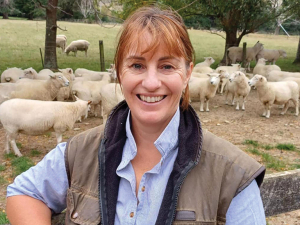
B+LNZ's Wormwise veterinarian Mary Bowron has won the Best Sheep and Beef Vet of the Year Award in recognition of her outstanding contribution to New Zealand’s sheep and beef sector.
Researchers at Massey University are using a special piece of scientific equipment to improve the measurement of greenhouse gas emissions from pasture soils.
More signs of a booming kiwifruit sector.
OPINION: David Seymour and James Meager's plan to make it easier for farmers and orchardists to operate drones can best be described a 'courageous' move.
New Zealand wool is reaching new heights as air filtration companies move away from synthetic products to biodegradable alternatives.