Evaluating Tech Providers Beyond The Product
As the dust settles after Fieldays, we're once again reminded of the sheer volume of technology now available to New Zealand dairy farmers.
 increase font size
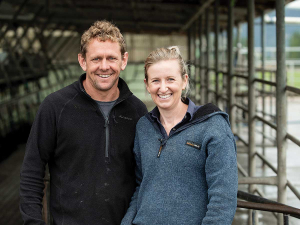
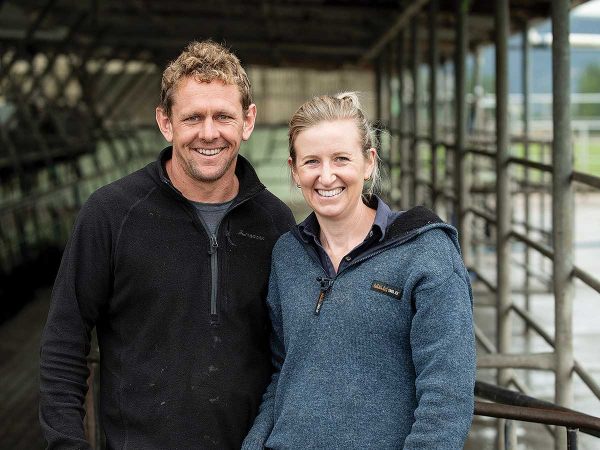 Rosie and Cody Cowley, Mosgiel
In farming there are external factors that can influence behaviour of a whole herd, such as a bad weather event, triggering false positive heat detections or health attentions.
Nedap’s unique pen correction feature accounts for these and automatically adjusts, so you don’t have to.
Nedap’s applications support manager Oceania and global grazing specialist, Jan Winke, is also a dairy farmer.
Jan and her husband own a dairy farm at Walton, in the Waikato, and have been using cow collars and utilising the data collected for approaching 10 years.
Collars monitor movement in cows and, when a cow is in heat, she becomes restless and her movement increases.
Jan explains that external factors, like weather or management events, can also elevate movement in cows, which may result in an abnormally high number of false positives when it comes to heat detection.
A true positive is when a cow is on heat, while a false positive is a cow identified as having a change in movement that could be a heat, but actually is not.
“In pasture-based systems like we have in New Zealand, cows are outside the majority of the time. We are measuring movement and behaviour and looking for deviation. Bad weather is the predominant thing that affects this. When there is a big storm, for example, cows will react and behave differently to their normal daily routine. This creates activity but it can be a false positive in that the event has affected the whole herd – and it’s unlikely the whole herd is on heat.”
Nedap’s pen correction feature determines if average activity of the herd has changed by a similar amount based on data from the last 10 days, and corrects for that.
“The Nedap programme will recognise and adjust for this, greatly reducing the number of false positives.”
On the Winke’s dairy farm an example of what can happen without pen correction was demonstrated when the mixer wagon broke down. When the cows came to the feed pad looking for food, only to find it wasn’t there, movement increased as they searched for food. Out of 800 cows, this event caused 200 heat detections, the majority of those were false positives. Using pen correction could have avoided this issue.
Mosgiel dairy farmers, Rosie and Cody Cowley, have Nedap collars and the pen correction feature ensured minimal disruption after a recent windstorm when the power was out for a few days.
“Previously, we would have got a lot of cows come in as being on heat with the increased movement, but because it now has a pen correction it looks at the average of the herd and then that’s factored into those heat cows, so it was business as usual,” Rosie explains.
The benefits of pen correction are ensuring streamlined, efficient operations and saving time.
“When you are auto drafting cows on heat, when there’s been a situation that has triggered false positives, you might have as many as 150 cows in your pen. Firstly, your pen might not be big enough to hold that number, then you are holding off more cows from going out and eating, disrupting their day and diet further,” Jan says.
“It defeats the purpose of an auto drafting system if you still have to manually go through and separate false positives from real heats.”
If a farmer is dealing with the aftermath of a storm, processing a large number of extra cows identified as false positives is a headache they could probably do without, she points out.
Pen correction is focused on heat detection, but the Nedap software performs the same job with heath data, too.
As the dust settles after Fieldays, we're once again reminded of the sheer volume of technology now available to New Zealand dairy farmers.
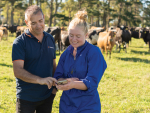
Technology adoption on New Zealand dairy farms has accelerated rapidly over the past decade.
For Taranaki sharemilkers Elly and Kale Grahame, technology hasn't beeen about overcomplicating their system.
For Ashburton farmer Craig Hickman, technology hasn’t replaced the way he farms, it’s strengthened how he operates day to day.
With collars on more than seven million cows worldwide, Nedap says its standalone launch into New Zealand represents world-leading, reliable and proven smart technology solutions for dairy farmers.


In farming there are external factors that can influence behaviour of a whole herd, such as a bad weather event, triggering false positive heat detections or health attentions.
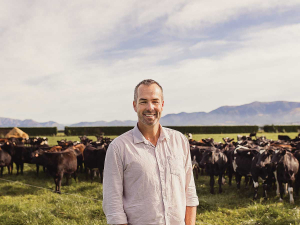
For Canterbury dairy farmer Cameron Henderson, supporting Meet the Need comes down to a simple question: how can the success of New Zealand farming benefit more than just those within the industry?
Fonterra board members are in line for a pay rise of around 3%.
Dairy processors are ready to further boost New Zealand’s export earnings but want the incoming government to match their ambition with good policy.
Massey University is best placed to solve the “problems” facing the dairy industry, says vice chancellor, Pierre Venter.
Synlait's longest serving employee – a man who joined the Canterbury-based milk processor even before it began processing milk – is now its newest executive.