White Clover: Free Nitrogen as Urea Prices Climb
Growing great pasture this season doesn’t have to break the bank.
 increase font size
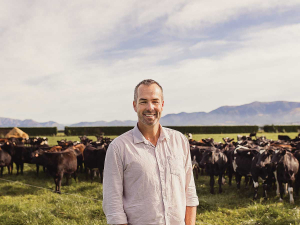
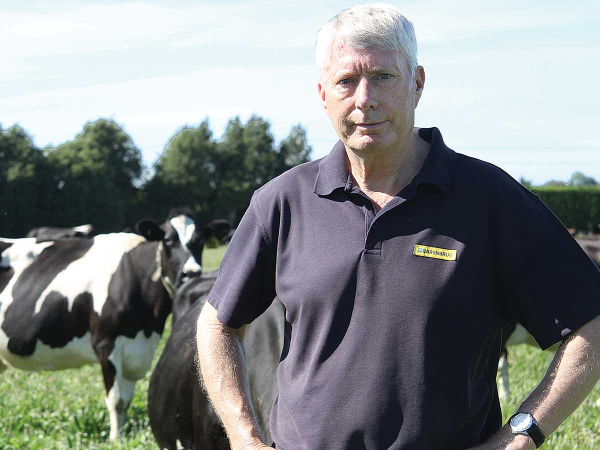 Graham Kerr, Barenbrug pasture specialist.
Fully renewing a Canterbury dairy farm in a mix of Array and 4front ryegrasses could lift profitability by more than $1,500/ha while cutting reliance on imported feed.
That’s according to new FARMAX modelling commissioned by Barenbrug and carried out by Macfarlane Rural Business (MRB).
The study modelled a typical 200ha Canterbury dairy farm milking 3.4cows/ha.
It compared four pasture options, using Nui as the baseline against Governor AR37, Array NEA2 and an Array/4front mix.
While all three newer pasture options delivered gains, Array and 4front produced the strongest results across physical, financial and environmental measures.
Graham Kerr, Barenbrug pasture specialist, says the company commissioned the analysis to quantify benefits of its latest proprietary cultivars compared with old genetics.
“We’re really excited by these results, which reinforce the massive value of producing extra high quality, homegrown feed in our pastoral dairy systems,” says Kerr.
“If you’re sowing a diploid perennial ryegrass Array is a standout. But if you want even more metabolisable energy (ME) with a diploid/tetraploid ryegrass mix, then move up to Array/4front.”
With farmgate returns looking strong for the season ahead, spring is the ideal chance to use these findings to future-proof farm productivity, he says.
The MRB modelling found the two biggest drivers of farm operating profit were growing more dry matter (DM), and lifting feed quality through higher ME.
“The surprising thing that came out of FARMAX was just how much of a difference higher ME can make,” Kerr says.
Moving from Governor to Array increased production by 56 kg MS/ha, which improved operating profit by $584/ha (to $7425) after costs.
“The driver was Array’s extra ME. It’s about 0.5 units higher than Governor from November to February, because it is very late heading and extremely leafy through summer.
“Half a unit of ME might not sound a lot, but it significantly increases cow intakes.”
Kerr says Array is a great option for farmers seeking dense, persistent, diploid pasture.
However, if they want to add a tetraploid to the mix, FARMAX showed sowing a 50:50 mix of Array and 4front improved EFS by another $253/ha (to $7678).
Again, the dollar gain comes from higher pasture quality, in this case because 4front’s ME is very high year-round, Kerr says.
“Not everyone wants tetraploids, as they are a bit less robust. But we have found the Array/4front mix works really well across many farms.”
Environmental indicators also improved.
Greenhouse gas emissions intensity (measured in kg CO2e/ t FPCM) fell with the new pasture cultivars, which is in line with Fonterra’s much publicised emphasis on the critical role of homegrown feed.
“We asked Fonterra to model the different pastures, and going from Nui to Governor dropped emissions intensity 2%. Moving to Array it dropped another 2%. And Array/4front was best, dropping another 0.9%.”
Growing great pasture this season doesn’t have to break the bank.
It's only just hit the market, but a new forage rape bred for dryland farms has already won the approval of lambs and young cattle both north and south.
Keeping cows happy and well fed at home this winter just got easier with the launch of a prolific new annual ryegrass bred to jump out of the ground even faster than its popular predecessor.
New industry trials confirm what matters most for perennial ryegrass seed this autumn: Cool, dry storage keeps endophyte viability above the 70% commercial threshold, according to pasture specialist Barenbrug.
Pasture specialist Graham Kerr claims that one hybrid ryegrass in New Zealand continues to dominate industry yield trials, as it has done every year since it was launched in 2021.

In farming there are external factors that can influence behaviour of a whole herd, such as a bad weather event, triggering false positive heat detections or health attentions.
For Canterbury dairy farmer Cameron Henderson, supporting Meet the Need comes down to a simple question: how can the success of New Zealand farming benefit more than just those within the industry?
Fonterra board members are in line for a pay rise of around 3%.
Dairy processors are ready to further boost New Zealand’s export earnings but want the incoming government to match their ambition with good policy.
Massey University is best placed to solve the “problems” facing the dairy industry, says vice chancellor, Pierre Venter.
Synlait's longest serving employee – a man who joined the Canterbury-based milk processor even before it began processing milk – is now its newest executive.