
Lanaco and Blueair Launch World-First NZ Wool Air Filter
New Zealand wool is reaching new heights as air filtration companies move away from synthetic products to biodegradable alternatives.
 increase font size
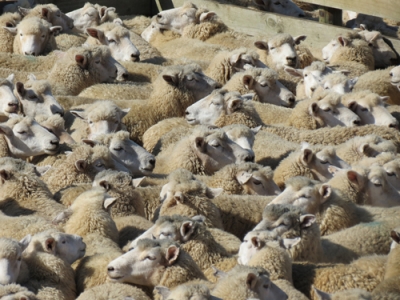
John Dawson, CEO of NZWSI, reports that the South Island sale this week saw a strong market with steady support.
Of the 9,250 bales on offer, 84.4% sold.
The weighted indicator for the main trading currencies was down 0.72% compared to the last sale on 17th September, helping hold up local price levels.
Dawson advises that in line with other Merino-growing markets, local prices for Merino Fleece 18 to 23.5 microns saw a slight easing. Compared to the last sale on 10th September, prices were 2 to 6% cheaper.
Mid Micron from 24 to 28.5 microns were firm to 1.5% cheaper. Compared to the sale of 17th September, Fine Crossbred Full Fleece were 2.5% firmer and shear types 2 to 4% dearer, with the very short types under the most pressure.
Coarse Fleece were up to 2% firmer with Coarse shears firm to 2% dearer.
Oddments were firm to 2% stronger.
There is still competition with China continuing to dominate, supported by Western Europe, Middle East, Australasia, and very limited activity from India and the United Kingdom.
The next sale on 1st October comprises approximately 6,000 bales from the North Island.
New Zealand wool is reaching new heights as air filtration companies move away from synthetic products to biodegradable alternatives.

Will a stronger, more coordinated voice help rebuild confidence and improve returns in the wool sector?
OPINION: Confidence in the wool sector is rebounding as prices hit levels not seen in more than 15 years.
Rising strong wool prices are finally returning the sector to profitability.
China remains New Zealand’s biggest market, taking $23 billion of our exports, but it’s no longer a commodity story, says Prime Minister Christopher Luxon.


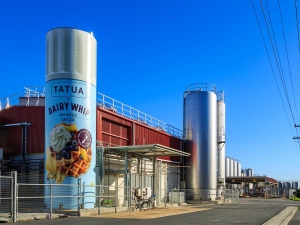
Waikato milk processor Tatua has again declared a record milk payout to farmer shareholders, leaving other processors in the dust.

A Labour-led Government won’t be bringing back the controversial freshwater rules of 2020.
National’s much-touted free trade deal with India featured in the Rural Issues Debate at Mystery Creek, Hamilton on Wednesday night.
New Zealand's 2026-27 freshwater fishing season has opened, with anglers encouraged to head to rivers and lakes over the coming days as conditions look favourable across much of the country.
Central Otago District Council (CODC) has voted against a plan to spread treated sewage sludge from Cromwell and Alexandra on farmland near Lauder, a decision Federated Farmers says reflects strong opposition from rural residents.
Pāmu has released its FY26 Integrated Annual Report, reporting a Net Operating Profit of $113 million, more than double the $49 million recorded in FY25.
