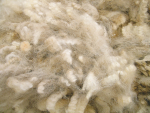
Editorial: Wool's Back in the Black
OPINION: Confidence in the wool sector is rebounding as prices hit levels not seen in more than 15 years.
 increase font size
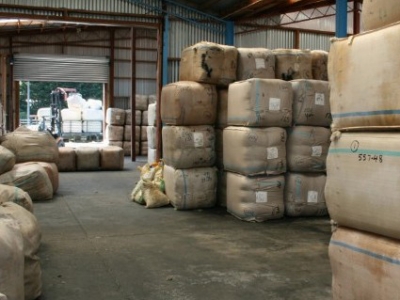
The weakening New Zealand dollar coupled with exporter pressure to meet shipping requirements and limited supply continues to underpin the wool market, says NZWSI.
Marketing executive Paul Steel says that the weighted indicator for the main trading currencies came down 2.14% compared to the last sale on 28th May.
Of the 6,876 bales on offer, 94% sold.
Steel advises that resurgent interest from China saw Mid Micron fleece 24.5 to 31.5 micron increase 6 to 12% with Fine Crossbred Fleece 33 to 35 micron 1.5 to 5% dearer against the last time offered on 21st May.
Compared to last week's North Island offering on the 28th May, Fine Crossbred Shears were 2 to 6% stronger. Good colour Coarse Crossbred Fleece were up to 1.5% firmer, average style eased slightly with poor colour firm.
Coarse Shears were firm to 3% dearer.
First Lambs Fleece received very strong support, lifting 6 to 8%.
Long Oddments were nominally 3% cheaper with good colour short oddments 6 % dearer and poor colour 2 to 3% firmer.
Competition was well spread with China dominating, supported by Australasia, Middle East and Western Europe.
The next sale is due on 11th June and comprises approximately 9,100 bales from the North Island.
However, due to insufficient wool coming forward and no stock wools on hand in brokers stores, the rostered South Island sale on 18th June has been cancelled.
OPINION: Confidence in the wool sector is rebounding as prices hit levels not seen in more than 15 years.
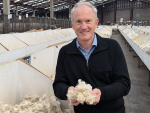
The recently signed free trade agreement with India is an invitation to strengthen relationships between the New Zealand and Indian strong wool industries, says Wool Impact chief executive Andy Caughey.
Strong competition and tightening supply have seen wool reach its highest prices paid at auction since 2011.
A collaboration between two New Zealand companies will see wool used as a renewable colour source for 3D printing.
OPINION: A bumper season all around.



State farmer Pamu has delivered its strongest operating result on record.
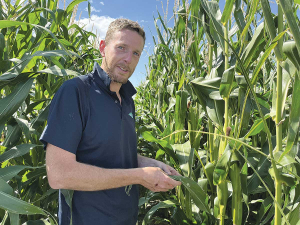
Four years since it was first detected in New Zealand, researchers and growers now know much more about management of maize pest fall armyworm (FAW).
The Government has announced it will pause key parts of Waikato Plan Change 1 (PC1) in a decision that is set to give Waikato farmers a reprieve from new consenting and farm-planning requirements while the wider resource management system is overhauled.
OPINION: The time has come for the Government to back the organic sector.
Plan ahead and be patient. That’s the message to farmers and horticulturalists from the chairman of the NZ Agricultural Aviation Association, Kent Weir.
The industry is crying out for graduates with agricultural related degrees.
