Diplomatic Incident
OPINION: Your old mate hears an international incident is threatening to blow up the long-standing Anzac alliance as Kiwis and Aussies argue over who wants new Australian resident and former NZ Prime Minister Jacinda Ardern.
 increase font size
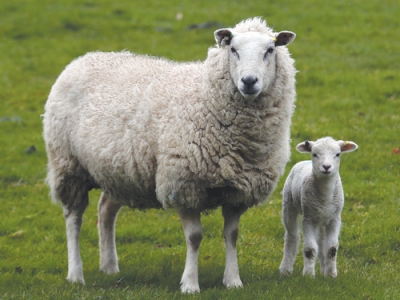 MLA predicts a positive outlook for Australia’s lamb industry.
Australian sheep farmers are banking on strong prices lamb in the coming years, but are warning of headwinds.
Tighter New Zealand production, continued global demand and a lower Australian dollar will continue to boost earnings, according to Meat and Livestock Australia.
MLA’s sheep industry projections for April indicate that strong market fundamentals for sheep and lamb prices should remain in place over the coming years.
However, MLA manager of market information Ben Thomas says the price potential for Australian sheep and lambs could be capped this year, due to unrelenting slaughter and higher, but slow-moving supplies in Australia’s largest three markets – China, the US and domestically.
“Offsetting the potential downward pressure on prices will be a slowdown in slaughter, which will happen if the three month rainfall outlook comes to fruition,” he says.
While lamb slaughter for the first quarter has remained steady on last year, the final slaughter figure is predicted to be 850,000 lower, at 21.4 million, and supplies tighter as the year progresses.
On the other hand, mutton supplies are already tightening, following two very high slaughter years; mutton slaughter for the first quarter of this year is already back 20% year-on-year, despite the dry conditions.
The Australian sheep flock has been revised down to just below 70 million head, as a result of prolonged mutton slaughter.
Thomas says nevertheless Australian exports for the first quarter were up 6% year-on-year, with the US (12,302 tonnes swt), China (8714 tonnes swt) and the Middle East (16,037 tonnes swt) the largest markets, making up 63% of exports while shipments to the EU were down 14% (3031 tonnes swt).
“While some indications in our largest markets suggest prices could come under pressure in the coming months – from higher global stocks and high domestic slaughter – the long term prospects for the sheep and lamb industry remain positive.”
After a strong start to the year, slow moving product in Australia, the US and China, Australia’s three largest sheepmeat markets, may cap Australian sheep and lamb price potential for the remainder of the year.
Offsetting this downward pressure will be a reduction in lamb slaughter, which will occur when seasonal conditions improve in southern Australia. For mutton, while slaughter and throughput has already slowed, any sustained support for prices will depend on when restocking interest is ignited.
Fortunately, after a dry February and March, the Bureau of Meteorology three month rainfall outlook points to ‘above average’ rainfall for most of southern Australia, which, if it eventuates, will go a long way to relieving the lamb supply pressure.
MLA sheepmeat survey results suggest that, as at February 28 February, the Australian breeding ewe flock had remained relatively unchanged year-on-year, at 41 million head.
Lamb kill revised
After a drier than expected first quarter, Australian lamb slaughter for 2015 has been revised higher, to 21.4 million head – which is still 850,000 head lower than the 2014 total.
Tighter supplies are likely once seasonal conditions improve.
The 2015 sheep slaughter forecast (7.5 million head) remains in line with the initial prediction, at 26% lower than 2014, with signs of shortening supplies already evident.
Importantly, with a pronounced slowdown in sheep slaughter, and continued high lamb slaughter, the national flock forecast for June 30, 2015 has been revised to 69.8 million head (down 1.8 million head, or 3%, on 2014) – falling below the 70 million mark for only the second time in a century.
OPINION: Your old mate hears an international incident is threatening to blow up the long-standing Anzac alliance as Kiwis and Aussies argue over who wants new Australian resident and former NZ Prime Minister Jacinda Ardern.
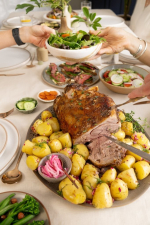
It’s official, lamb will take centre stage on Kiwi Christmas tables this year.
OPINION: Your old mate hears that at a recent China Business Summit, PM Christopher Luxon delivered a none-too-subtle "could try harder" report card on the red meat industry regarding its exports to China - particularly when compared to Australia.
More Australian states are embracing virtual fencing technology, opening growth opportunities for Kiwi companies like Halter.
Fonterra says its ongoing legal battle with Australian processor Bega Cheese won’t change its divestment plans.


Leading figures from the major political parties will be questioned on their primary sector policies at the Rural Issues Debate at Mystery Creek Events Centre, Hamilton, on 30 September.
Beef + Lamb New Zealand (B+LNZ) says it welcomes the passage of the Natural Environment Bill and Planning Bill, calling the bills a positive step for sheep and beef farmers.
A spate of southerly winds bringing cold temperatures has presented challenges for Taranaki dairy farmers.
Converting a longstanding cropping farm to dairy was the only way to ensure the land stayed in the family long term, says new dairy farmer Rod May.
As the election heats up, Organics Aotearoa New Zealand (OANZ) has launched its election scorecard designed to help voters wanting to support policies that grow organic and New Zealand's organic sector.