Mark Hooper Joins NZPork Board as Independent Director
Rural leader Mark Hooper has been appointed as an independent director to the NZPork board, bringing extensive farming, governance and advocacy experience to the role.
 increase font size
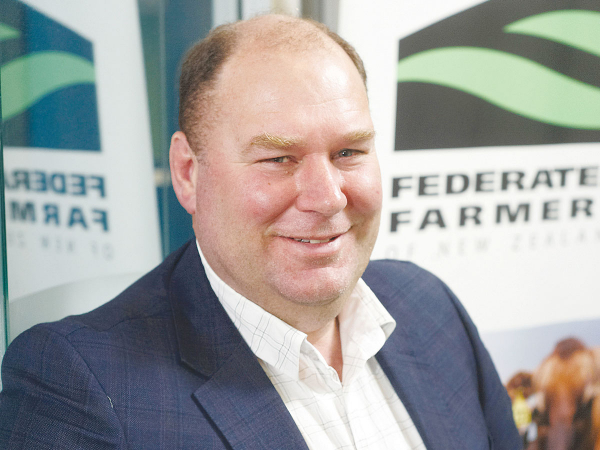 Fed Farmers national president Andrew Hoggard.
OPINION: Price penalties won't drive down livestock emissions without affordable and practical new technologies being available to farmers - unless the aim is to kill off the sector.
Federated Farmers is baffled by comments by Climate Change Minister James Shaw that, “Pricing isn’t the only tool in the toolbox, but it remains the best way to reduce emissions directly – and that’s name of the game.”
This is an overlysimplistic and domestic focused solution to a complex global problem. The global atmosphere does not benefit from New Zealand shrinking food production, even if our politicians can crow about local emissions reductions. Our farms’ emissions footprint is world-leading; forgone production here would just shift offshore to less efficient farmers.
An overly-high price signal for our livestock emissions would also have severe implications for the agricultural sector, regional economies, and the wider New Zealand economy.
An overly-high price signal for our livestock emissions would also have severe implications for the agricultural sector, regional economies, and the wider New Zealand economy.
Modelling done under the He Waka Eke Noa partnership, which included the Ministry for the Environment and Ministry for Primary Industries, showed that to apply pricing alone to achieve the Government’s methane reduction targets would result in a devastating number of sheep and beef farms going broke, along with a significant number of dairy farms.
This is what Feds have been saying for years. This work showed that to reduce methane emissions by 5% by 2030 with a price alone (that’s only half of the Government’s current targets) would require 20% and 58% cuts in the profitability of dairy and sheep and beef farming, respectively. *
Unfortunately, despite being a member of the partnership, the Government didn’t request that the full price be modelled. This is, of course, notwithstanding Federated Farmers’ opposition to the current targets which are unscientific and set the bar for methane much higher in terms of warming than all other gases.
This modelling, unfortunately, does not show what the wider impacts of that price would be on the regional and national economy. That is further work we would like carried out, but you don’t need to win a Nobel prize in economics to work out it will be severe.
Drops in production of both red meat and dairy will also mean fewer processing jobs and farming support jobs in provincial centres and other losses throughout the wider economy.
Another report commissioned by He Waka Eke Noa showed that, “With partial (50%) offsetting of emissions, there could be a 15% increase in global emissions for every tonne of emissions reduced in New Zealand from lower output of beef… The equivalent estimates for sheep and dairy production are emissions increases of 7% and 30% respectively.” **
This report contains several caveats and states that these figures are illustrative only, but it highlights the benefits of avoiding emissions leakage by promoting efficient production and the use of technology, while disincentivising output reduction in New Zealand. What this process has shown is that the best way to achieve reductions is through new technologies and their adoption on farm. A price mechanism should only be used to incentivise the uptake of those technologies.
That is one of the key principles in the founding document of He Waka Eke Noa. If the Government and Minister Shaw did not agree with this clearly defined role for an appropriate pricing mechanism, then they should not have agreed to He Waka Eke Noa.
* (Pricing agricultural GHG emissions: impacts on dairy, sheep & beef and horticulture industries, pp. 51).
**(Pricing agricultural GHG emissions: impacts on emissions leakage, pp.19).
Andrew Hoggard is national president of Federated Farmers.
Rural leader Mark Hooper has been appointed as an independent director to the NZPork board, bringing extensive farming, governance and advocacy experience to the role.
Climate, nature and animal wellbeing make up Fonterra's refreshed sustainability roadmap released last week.
There's been widespread support from the primary sector for the Government's announcement on changes to freshwater farm plans that come under the Natural Environment Bill, which is now set to replace the existing RMA.
The terrible floods that hit the Wairarapa may have subsided, but the danger to farmers still exists, according to local Federated Farmers president Rob Hickson.
Will a stronger, more coordinated voice help rebuild confidence and improve returns in the wool sector?

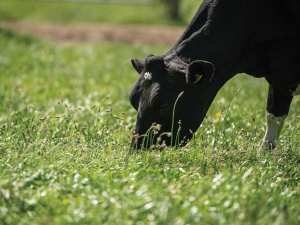
Farms across the upper North Island are trialling different pasture mixes as part of a research programme that aims to build greater resilience into farming systems.
Election years are always a concerning time for farmers, according to DairyNZ chair Tracy Brown.
The Ballance Farm Environment Awards are coming to the West Coast of the South Island.
Most dairy regions around the country have had a pretty good season so far says Tracy Brown.
Rural leader Mark Hooper has been appointed as an independent director to the NZPork board, bringing extensive farming, governance and advocacy experience to the role.