Editorial: Which Chris By Christmas?
OPINION: At first glance it appears that Father Christmas has delivered the rural sector good tidings, with most pundits predicting the return of the centre-right coalition.
 increase font size
 Statistics NZ is telling us that the country’s sheep flock is down to its lowest number since 1943.
You know something is up in the farming world when three different government agencies are all casting a critical eye over the sector.
First up, the Reserve Bank recently singled out the New Zealand dairy sector as an “area of risk” to the country’s financial system. The bank says in its six-monthly Financial Stability Report that the country’s financial stability could be tested by the dairy sector, “which is experiencing a sharp fall in incomes in the current season due to lower international prices”.
Fonterra will later this month release its milk price forecast for 2015-16 and indications are that it will be around $5.00/kgMS, down from last season’s record price of $8.40.
The bank’s report adds that 11% of farm debt was held by farmers with both negative cash flow and elevated loan-to-value ratios. “Financial stress in the dairy sector could rise markedly if low global milk prices persist beyond the current season.”
Reserve Bank governor Graeme Wheeler added that many highly leveraged farms are facing negative cashflows, and the risks will become more pronounced if low milk prices persist beyond the current season.
Next, Statistics NZ is telling us that the country’s sheep flock is down to its lowest number – just under 30 million – since 1943. This is well down on the peak of around 70 million in the 1980s.
For a country built on the sheep’s back, this is a major milestone and a reality check on the move into dairy during the past decade and just how tough many sheep farmers are doing it. One only has to look at meat processors’ ‘promise’ late last year of a $100 lamb – it’s currently $80 – to see why the nation’s sheep flock is in decline.
Finally, we have WorkSafe NZ homing in on the farming sector and its less-than-impressive health and safety record onfarm. The government’s body’s workplace proposals, especially on quads, have many already stressed farmers seeing red.
There is no doubt things are difficult in the sector at present. But farming has required managing risk and overcoming adversity – be it financial or climatic. However, those (mainly politicians) carping on with doomsday scenarios for farming and agriculture need to take a deep breath, offer support and dial back the criticism.
Sure, dairy prices are low at present. But let’s not forget only 18 months ago they were at record highs. What goes down will go up: that is commodity cycles.
The sheep sector’s issues are more problematic than dairy’s, but red meat and wool are still excellent products the markets want and need.
Meanwhile, despite WorkSafe NZ’s ‘sledgehammer’ approach, there is clearly an issue with farm accidents and deaths and this must be addressed. Pushback from the farming sector has alerted WorkSafe and its minister to issues and hopefully these can be addressed.
The sun will come up tomorrow and better times will come for the farming sector – you can bet on it.
OPINION: At first glance it appears that Father Christmas has delivered the rural sector good tidings, with most pundits predicting the return of the centre-right coalition.

OPINION: The Government's decision to reinstate agriculture and horticultural science as a standalone subject from Year 11 is the right one.
OPINION: Political parties are getting plenty of advice and recommendations from sector groups as the election approaches.
OPINION: Making it easier to collect rainwater and use it to grow crops and livestock is a no brainer.
OPINION: New health and safety guidance unveiled by the Government recently provides farmers greater certainty about what is expected of them when managing risks on farm.


OPINION: At first glance it appears that Father Christmas has delivered the rural sector good tidings, with most pundits predicting the return of the centre-right coalition.
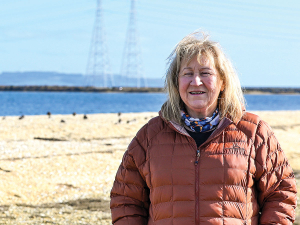
For 15 years, Glenda Rees has travelled from Gore to Awarua, often several times a week, to keep watch over one of the country’s rarest birds.
With some farmers opposing a government-industry partnership set up to develop methane reducing products, one NZ company claims that it already has a product on the market.
During the nesting season, from September to December, industrious starlings can quickly build nests in the darker areas behind tractor and vehicle, usually close to hot engines, typically resulting in localised damage or in some cases complete write-offs.
The meat processing industry is much more collegial than it was in the past and is now more focused on common goals.
With the last couple of months having seen some potential tractor purchases put on hold with the impending election and continued input cost rises, year-to-date figures, ending September, has seen deliveries up around 5% over the same period in 2025, with a total of 2026 units.