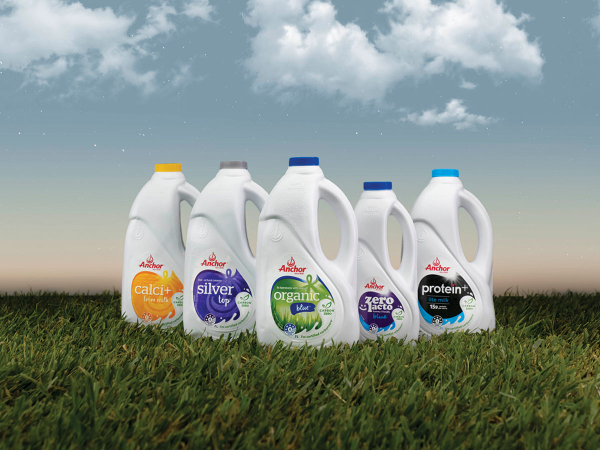
Soprole in Chile was the largest, but there were more than 20 countries where consumer marketing companies were established and Anchor and other brands were successfully launched.
The prime motivation at the time for those investments was not, as many today think, profit and added value. It was to create more secure outlets for New Zealand’s milk; those were the days of butter mountains and dumping and loss of the UK market. New outlets had to be found quickly, and branded consumer products were a much more reliable ongoing sales opportunity than commodity tenders in places like Algeria and Venezuela.
The brand businesses needed to operate profitably, but the benchmark was the return from selling the same amount of milksolids into crowded – and at times barely existent – bulk markets.
It was always envisaged that the brand businesses would in time become increasingly valuable, but for many years it was their value as a secure outlet for milk that mattered most.
Fortunately for New Zealand, the GATT Uruguay Round put a stop to European and American surplus mountains and dumping, and in the course of the 1990s and since, world demand for dairy products has steadily grown. World prices have increased to reflect the true cost of production – and production cost is where New Zealand has an ongoing advantage.
The need to own consumer businesses to move our milk no longer exists. There is no difficulty now in selling all we can produce at good prices. And there are also many opportunities to add value in food service and specialised ingredient products. The only justification for Fonterra to continue to own and invest in consumer brands is if it can achieve an attractive return on the capital invested. And sadly that is not the case. Fonterra was formed more than 20 years ago and over that time it has struggled to achieve an acceptable return on capital in its consumer businesses. Some decisions such as the investments in China have resulted in very substantial losses.
Read More:
- Fonterra posts $1.1B profit, $16.2B returns to shareholders
- Fonterra sale could deliver $3.2b windfall to farmers
- Why Fonterra accepted defeat in the dairy aisle
There are clear reasons why Fonterra has found it too difficult:
- Standard high volume food products such as butter and cheese and milk powder are intensely competitive and don't offer significant brand margins. In most countries the market is dominated by two or three large and very capably managed brands whose owners work extremely hard to ensure other suppliers struggle to survive.
- Every one of the world's major dairy brand marketers has a huge domestic market in which to develop and test products and management expertise - New Zealand's domestic market is simply too small to do that.
- Fonterra would need to be able to recruit highly capable and experienced international brand marketing executives, and have a board of directors experienced in governing a global consumer business - neither has been, or is likely to be, available in New Zealand. We are too remote and our domestic market is too small. New Zealand has had some international business successes, particularly where technology is a factor (such as Fisher and Paykel healthcare), but we have very limited experience in managing business networks beyond our border.
Fonterra's decision to sell has been based on what it thinks is best for its shareholders - and the absolute priority for them is the highest achievable return for their milk. It could only sensibly continue to own a branded consumer business if it expected to earn a sound return on the capital invested – and that isn’t the case.
After many years of trying, it should surprise no one that Fonterra has decided to sell, and to focus its energy on opportunities where New Zealand does have the skills and experience to expect to manage successfully.
Murray Gough was the chief executive of the New Zealand Dairy Board from 1985 to 1992