New Zealand and Ireland Extend $34.5m Climate Research Partnership for Agriculture
Ireland and NZ have concluded a deal to extend a joint research programme on climate change.
 increase font size

A mate of the Hound who recently travelled to Ireland found that country’s airport biosecurity rather lax.
On the flight’s approach to Dublin came a request that passengers involved in agriculture should make themselves known to the Department of Agriculture. This old mutt’s honest mate, after passing the immigration check and collecting his bags, asked an Irish customs official who he should speak to about biosecurity. “What’s biosecurity? I’m looking after border security,” was the reply. Our Kiwi traveller said he was off a farm in NZ, with the potential for disease, etc. “Aw, that’ll be the Department of Agriculture you’ll be wantin’… over there to the right. But I don’t fancy your chances, there’s never anyone there.” Sure enough, no one there; he waited a few minutes but still no one appeared, so our traveller just wandered off.
Ireland and NZ have concluded a deal to extend a joint research programme on climate change.
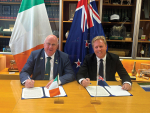
Ireland's Minister of state for Agriculture says it’s hard to explain to Irish farmers the size and scale of NZ farms.
The Irish Minister of State for Rural Communities says his country and New Zealand face very similar challenges on a range of issues related to agriculture, including climate change, biodiversity and rural depopulation.
In the rural landscapes of New Zealand and Ireland, a shared agricultural heritage thrives, built on a strong mixture of tradition and innovation, with mirror image climates earning both countries global acclaim for their food quality and sustainable agriculture.
MPI director general Ray Smith reckons NZ has a lot to learn from the Irish Agriculture and Food Development Authority – called Teagasc (pronounced ‘Chog us’).


Federated Farmers has welcomed new rural policies released by ACT, saying they align closely with its own election priorities.

Rural Contractors NZ says proposed changes to land transport rules for agricultural vehicles are a welcome response by the Government to out of date regulations which have seen members hit with huge fines.
Alliance is calling for final applications for its 2027 Graduate Programme, with applications closing on Sunday 25 October.
Decades piloting planes has ensured vet and farmer David Hayes is focused on safety. So, after a serious accident while welding on farm, he is sharing his experience so others can learn from it.
Canterbury milk processor, Synlait Milk has confirmed Leon Fung as its chief executive officer.
OPINION: Making it easier to collect rainwater and use it to grow crops and livestock is a no brainer.