fbpx
Print this page
Thursday, 18 July 2024 08:55

Editorial: Glyphosate here to stay

Written by  Staff Reporters
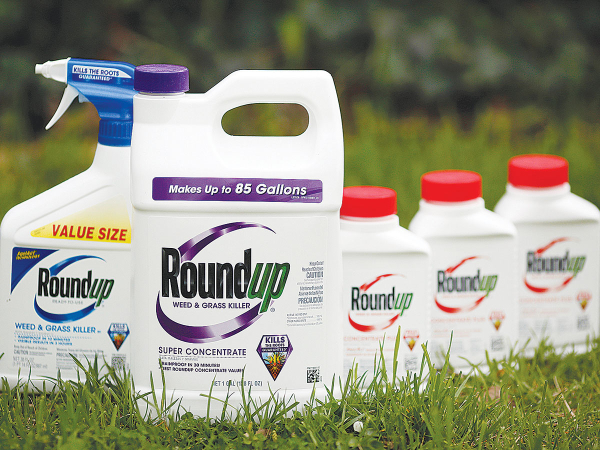
Glyphosate is most commonly marketed as Round Up. Glyphosate is most commonly marketed as Round Up.

OPINION: Growers and orchardists will be breathing easy following last week’s Environmental Protection Authority (EPA) ruling that there are no grounds to review the approval for the use of glyphosate.

Glyphosate – most commonly marketed as Round Up – is a herbicide sprayed onto the green foliage of plants, and absorbed within that plant to cause its death in about two weeks. Essentially, it kills the weeds that compete with the chosen crop for nutrients and water.

Glyphosate – most commonly marketed as Round Up – is a herbicide sprayed onto the green foliage of plants, and absorbed within that plant to cause its death in about two weeks. Essentially, it kills the weeds that compete with the chosen crop for nutrients and water.

A survey by Federated Farmers three years ago found that 93% of respondents used glyphosate. Farmers made it clear in the survey that they support continuing status quo use and regulation around glyphosate. They also made it clear that restricting or prohibiting the use of glyphosate would mean that they would be unable to farm to the same quality or quantity as they currently are.

The Environmental Law Initiative (ELI), applied to the EPA in February 2024 to decide whether there are grounds to reassess glyphosate and glyphosate-containing substances, cited significant new information about the negative effects of the substance.

After reviewing information provided by ELI and recent international research on the substance, a decision-making committee of the EPA has decided there are no grounds for a reassessment.

This is good news for our growers and orchardists. EPA’s ruling means they can continue to use herbicides like Round Up without new restrictions.

Farmers need the best tools and technological solutions to grow enough crops, using fewer natural resources to produce sufficient high-quality food, respect the environment, safeguard consumers and support themselves.


More like this

EPA Approves Beetle to Tackle Chilean Flame Creeper

Environment Southland is welcoming this week’s decision by the Environmental Protection Authority (EPA) to approve the release of Blaptea elguetai, a leaf‑feeding beetle that will help control the highly invasive Chilean flame creeper.

Editorial: Marlborough's viticulture evolution

OPINION: When I moved to Marlborough two decades ago, I found countless lines of tidy vines, neatly mowed and carefully sprayed, with diligent conventional practices interspersed with the odd organic or cover-cropping outlier, like Te Whare Ra.

Featured

Synlait, Nestlé Expand Eco-Focused Dairy Partnership in NZ

A partnership between Canterbury milk processor Synlait and the world's largest food producer, Nestlé, has been celebrated with a visit to a North Canterbury farm by a group including senior staff from Synlait, the Ravensdown subsidiary EcoPond, and Nestlé's Switzerland head office.

National

Machinery & Products

Chinese Tractors Eye Western Europe

Having caused quite a stir at last year’s Agritechnica, Chinese manufacturer Zoomlion is reported to be conducting large-scale field trials…

Franz Grimme Turns 80

Franz Grimme recently celebrated his 80th birthday earlier March and continues to be an entrepreneur with passion and pioneering spirit,…